



Paying on your due date won’t lower what credit bureaus see.
Paying before your statement closes will.
Most issuers report the balance that exists on your statement closing date, not the later due date.
If you want lower reported utilization, schedule payments to post one to three days before that closing date.
This post shows how to find your closing date, the best timing windows, and quick checks to confirm the lower balance was actually reported.
Optimal Billing Cycle Timing to Lower Reported Utilization

The balance on your credit report is almost always the balance sitting on your account when your card issuer generates your monthly statement. That moment is your statement closing date. It’s not the same as your payment due date. Most issuers report to the three major bureaus once per billing cycle, and that report typically goes out on or within a few days of the statement closing date. Pay your card before that closing date and the lower balance gets reported to the bureaus, which drops your reported credit utilization.
The due date lands 21 to 25 days after the statement closes. Billing cycles themselves usually run 28 to 31 days. If your statement closes on the 15th, your due date might hit around the 10th of the following month. To reduce the balance that credit bureaus see, you need to pay before the 15th. Paying on the 10th keeps you on time and avoids late fees, but the bureaus already got a report showing whatever balance existed on the 15th. The due date is your deadline for avoiding penalties. The closing date is your target for improving your reported utilization.
Say you’ve got a $5,000 credit limit and a $2,000 balance at closing. Your reported utilization is 40 percent. Pay $1,000 a few days before the statement closes and the issuer reports a $1,000 balance, dropping your utilization to 20 percent. A reliable window is one to three days before the closing date. That gives your payment time to post and ensures the lower balance is what appears on the statement and gets sent to the bureaus.
Here’s the four-step process to time your payment correctly:
- Locate your statement closing date by reviewing your most recent monthly statement or logging into your account online.
- Schedule a payment to post one to three days before that closing date.
- Verify the payment has posted by checking your current balance before the closing date arrives.
- Confirm the reported balance by reviewing your credit report or checking the balance that appears on the next month’s statement.
Key Billing Cycle Concepts That Influence Reported Balances
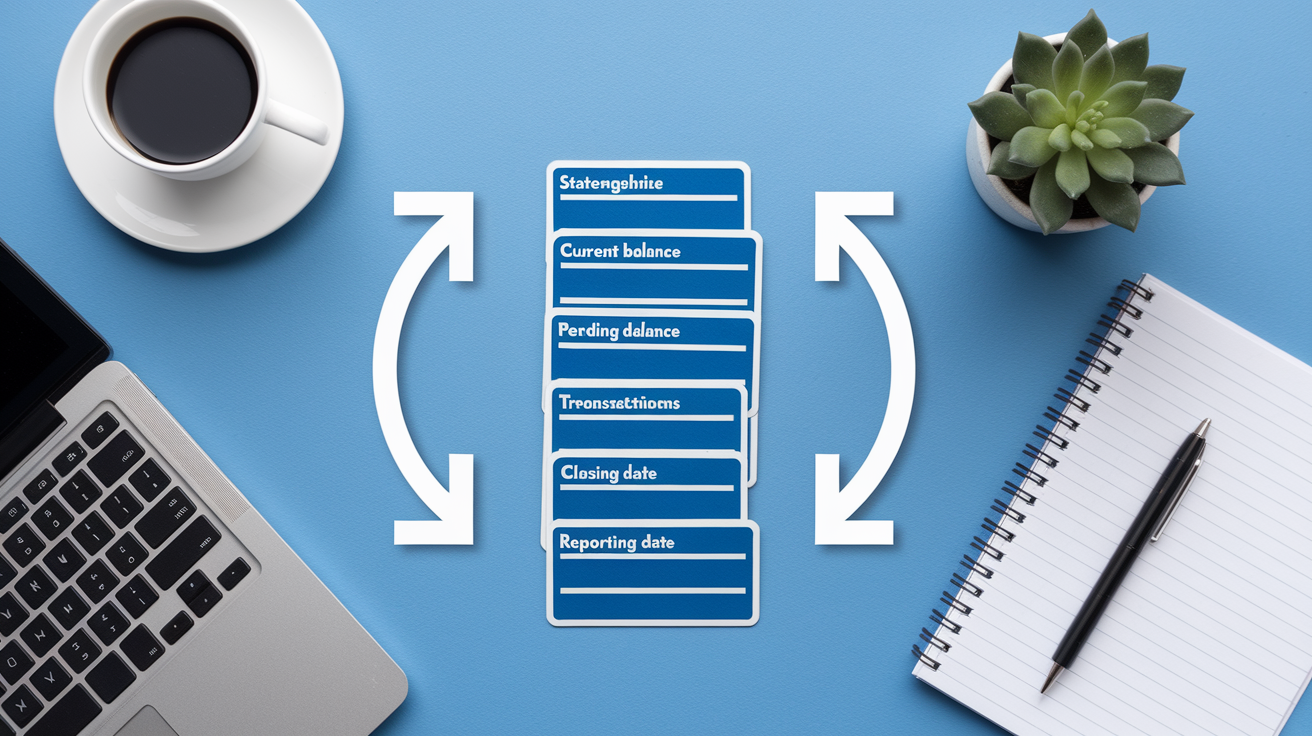
Your statement balance is the total you owed when the billing cycle closed and the statement was generated. Your current balance is the real-time total that includes any new charges or pending transactions that haven’t yet appeared on a statement. If you make a purchase after the statement closes, that charge shows up in your current balance but doesn’t affect the balance that was already reported to the bureaus. Paying down your current balance before the next statement closes is the action that lowers the next reported figure.
Some issuers may report at different times or more than once per month, but the most common pattern is a single report near the statement closing date. If you’re unsure when your issuer reports, call the number on the back of your card and ask for the exact reporting date. That date is often the same as the closing date, but confirming removes guesswork and ensures your payment timing hits the right window.
| Term | Definition | Effect on Reported Utilization |
|---|---|---|
| Statement balance | Total owed when the billing cycle closed and the statement was generated | This is the balance that gets reported if the issuer reports on the closing date |
| Current balance | Real-time total including pending and posted transactions after the statement | Doesn’t affect the last reported balance; affects the next report if unpaid at next close |
| Pending transactions | Charges that have been authorized but not yet posted to your account | May post after the closing date and raise the reported balance for the following cycle |
| Closing date | Day the billing cycle ends and the statement is generated | The balance on this date is typically what issuers report to credit bureaus |
| Reporting date | Day the issuer sends account information to the credit bureaus | Usually the same as or very close to the closing date; determines the utilization bureaus record |
Best Timing Strategies to Keep Revolving Utilization Low
Making multiple payments during a single billing cycle keeps your balance low more consistently and reduces the daily balance that issuers use to calculate interest if you carry a balance. A mid-cycle payment, paid around the halfway point between closing dates, lowers the average balance and gives you breathing room for additional spending before the next statement closes. If you charge $1,500 in the first two weeks and then make a $1,000 payment mid-cycle, your balance is lower when you reach the closing date than it would’ve been if you waited until the due date.
Paying right after a large purchase is another practical move. If you buy a laptop for $1,200 and that charge posts the next day, a same-day or next-day payment brings your balance back down before the statement closes. This works especially well if you’re close to a utilization threshold and want to stay below 10 percent or 30 percent. The purchase bumps your balance temporarily, but the fast payment prevents the higher balance from being recorded and reported.
These strategies don’t replace the need to pay your statement balance by the due date if you want to avoid interest. Paying before the statement closes lowers what gets reported and may also reduce the interest you pay by lowering your daily balance. You still owe the full statement balance by the due date to preserve your grace period and keep your account in good standing.
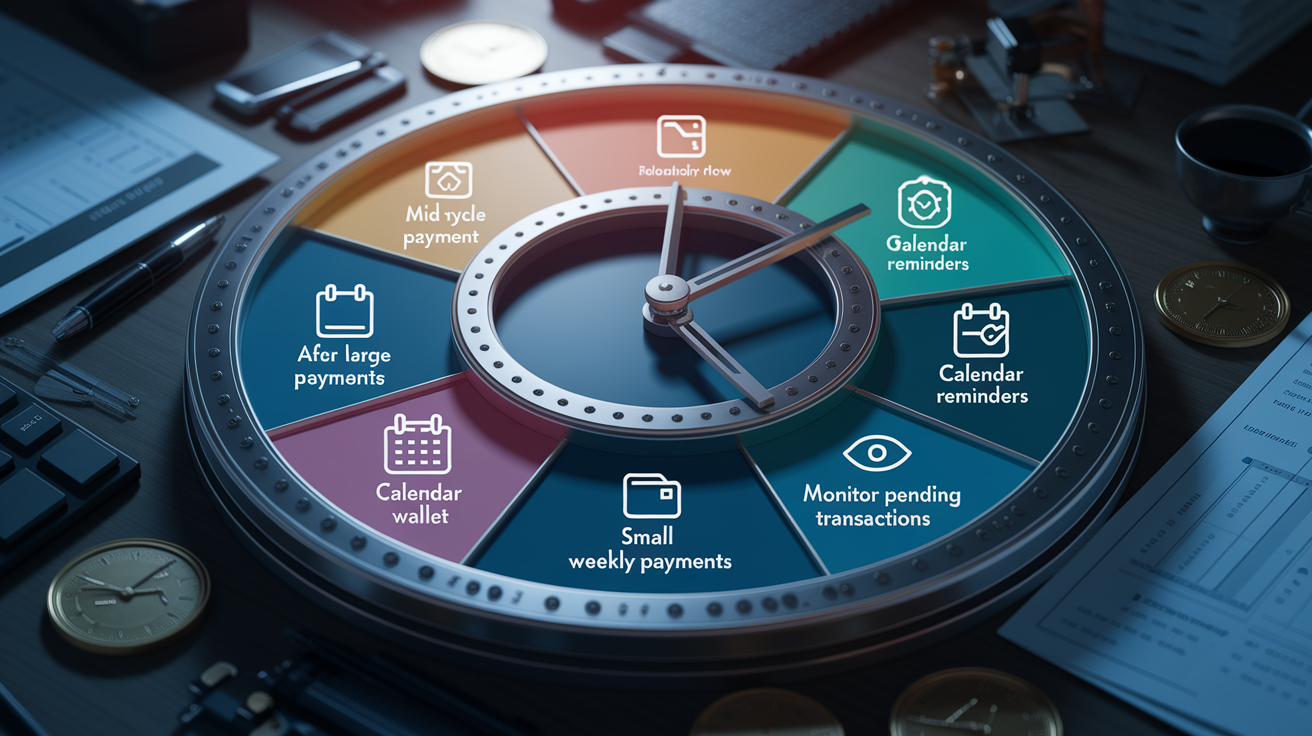
Six practical timing strategies to keep utilization low:
- Pay mid-cycle to lower the average balance and reduce the balance at statement close.
- Pay right after large purchases to prevent temporary spikes from becoming reported balances.
- Schedule a payment one to three days before each statement closing date to ensure the lower balance posts before reporting.
- Use calendar reminders set for two or three days before your closing date to trigger manual payments.
- Make small weekly payments if your spending is frequent and spread throughout the month.
- Monitor pending transactions in the final days before closing and time payments around when those charges post.
Statement Closing Date vs. Due Date: Quick Clarification for Payment Timing
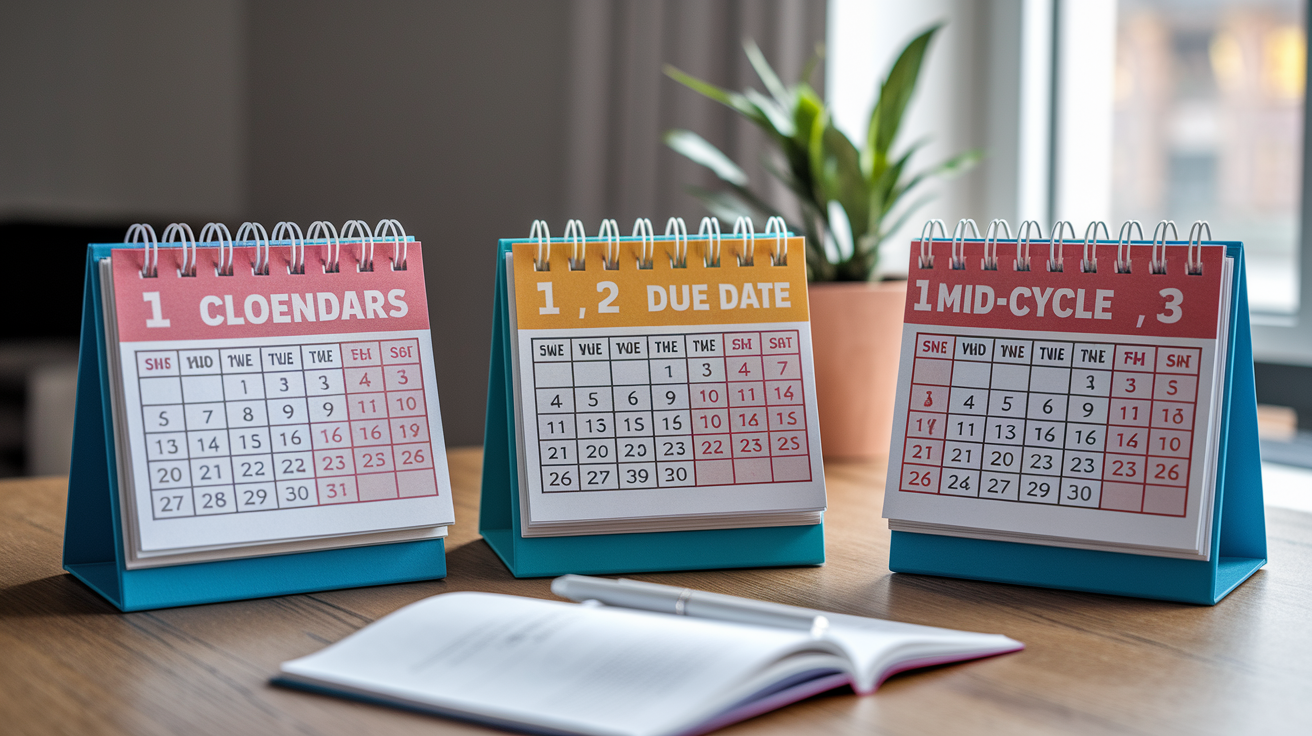
The statement closing date is the last day of your billing cycle and the day your balance snapshot is typically sent to the credit bureaus. The payment due date is the deadline to pay at least the statement balance without getting hit with interest or late fees. Paying on or before the due date protects your payment history and keeps your account current. Paying before the closing date lowers the balance that credit bureaus record, which directly affects your credit utilization percentage.
Three examples showing how balances differ depending on payment timing:
- You have a $3,000 balance on the closing date and you pay $2,500 three days before the close. The bureaus see a $500 balance and your utilization drops sharply.
- You have a $3,000 balance on the closing date and you pay $2,500 on the due date. The bureaus already received a report showing $3,000, so your reported utilization remains high until the next cycle.
- You have a $3,000 balance on the closing date and you pay $1,000 mid-cycle plus another $1,500 two days before the close. The bureaus see a $500 balance, the same result as example one, but you spread the cash outflow across two payments.
How Much to Pay: Target Utilization Thresholds and Examples
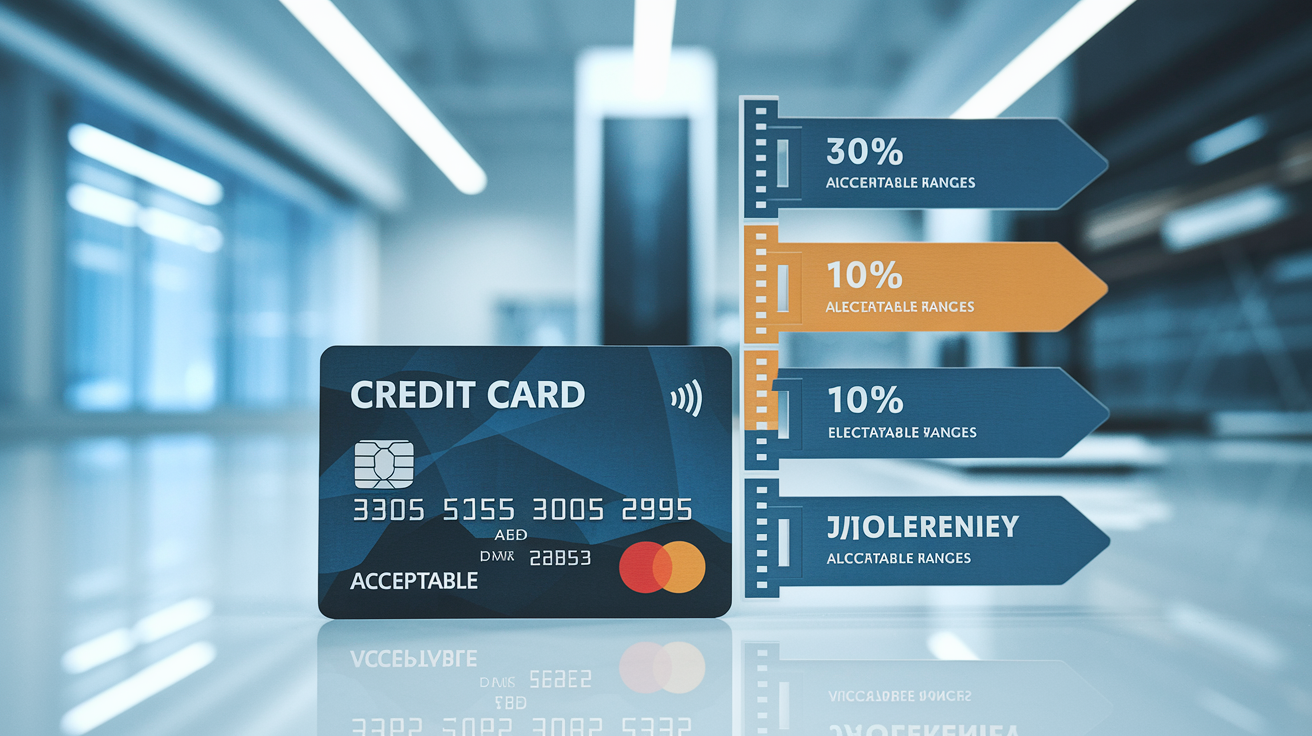
Credit scoring models generally treat utilization below 30 percent as acceptable and utilization below 10 percent as the sweet spot. Thirty percent is a common guideline because crossing that threshold can trigger score reductions in many scoring algorithms. Ten percent is preferred because scores tend to improve further as utilization drops into single digits. If you have a $10,000 total credit limit across all your cards, keeping your aggregate reported balance below $3,000 keeps you under 30 percent. Keeping it below $1,000 puts you under 10 percent.
Individual card utilization also matters. If you have three cards with limits of $5,000, $3,000, and $2,000, and you carry a $4,500 balance on the $5,000 limit card, that card alone shows 90 percent utilization. Even if your aggregate utilization across all three cards is reasonable, the high per-card ratio can hurt your score. Paying down that one card before its statement closes reduces both the individual card utilization and your overall aggregate figure.
Four threshold levels and what they mean:
- Above 30 percent — often triggers score drops and signals higher credit risk to lenders.
- Below 30 percent — generally safe range that avoids major penalties in most scoring models.
- Below 10 percent — preferred target for score improvement and strongest approval odds.
- Zero percent — can be helpful, but reporting a small balance (1 to 5 percent) on at least one card shows active use without risk.
Here’s a concrete example: you have a $10,000 total credit limit and a $3,500 balance at statement close. Your utilization is 35 percent. You decide to pay $2,500 before the next closing date. Your new reported balance is $1,000, and your utilization drops to 10 percent. If your score was being penalized for the 35 percent figure, that 10 percent balance may lift your score within one billing cycle once the bureaus update.
How to Find Your Statement Closing Date and Reporting Date

Your statement closing date is printed on every monthly statement, usually near the top or in the account summary section. If you receive paper statements, check the most recent one. If you use online or mobile banking, log in and view your last statement as a PDF. The closing date will be listed clearly, often labeled “statement closing date” or “billing cycle end date.” That date is your primary target for payment timing.
If you can’t locate the closing date or want to confirm when your issuer reports to the bureaus, call the customer service number on the back of your card. Ask for both the statement closing date and the reporting date. Most reps can provide both. If the rep is unsure about the reporting date, ask to be transferred to the credit reporting or account services department. Some issuers report on the same day the statement closes. Others report a day or two later. Knowing the exact day removes uncertainty and lets you schedule payments with confidence.
Four exact steps to locate your closing and reporting dates:
- Check your most recent statement PDF — the closing date is listed in the header or summary box at the top of the first page.
- Open your mobile app — navigate to statements or billing details; the closing date appears alongside the due date.
- Review recent statements online — log into your account on a desktop browser and open the past two or three statements to verify consistency.
- Call your card issuer directly — speak to a rep and request both the statement closing date and the date the issuer reports to credit bureaus.
Payment Timing for Major Credit Events (Loans, Auto, Mortgage)
Lenders pull a credit snapshot at the time you apply, and that snapshot reflects the balances your card issuers reported most recently. If you’re planning to apply for a mortgage, auto loan, or personal loan, paying down your cards before the statement closes in the weeks leading up to your application can improve the utilization figure lenders see. Most bureaus update reports monthly as issuers send new data. If you reduce your balances now and your issuers report the lower figures within one cycle, your credit report will reflect the improvement by the time the lender pulls your file.
Preparing for a credit pull typically requires two to six weeks of controlled utilization. If your closing dates fall early in the month and you plan to apply mid-month, one early payment before the closing date may be enough. If your closing dates are scattered or you’re not sure when the lender will pull your report, lowering balances across two consecutive cycles gives you more margin. The goal is to ensure the balance on your report is as low as possible when the lender reviews your application.
Mortgage underwriters are especially sensitive to utilization because they’re looking at debt-to-income ratios and overall credit risk. Even moderate utilization, around 25 to 35 percent, can raise questions if you’re near approval thresholds. Auto lenders and personal loan underwriters also review utilization but may have slightly more flexible guidelines. In all cases, lower reported utilization improves your approval odds and may help you qualify for better interest rates.
| Loan Type | Recommended Timing | Utilization Goal |
|---|---|---|
| Mortgage | Pay balances down at least two cycles before application to ensure updates post | Under 10 percent aggregate, ideally under 5 percent on individual cards |
| Auto loan | One to two cycles before applying; confirm closing dates align with application timing | Under 30 percent minimum; under 10 percent preferred |
| Personal loan | One cycle before applying if possible; mid-cycle payment acceptable if applying soon | Under 30 percent to avoid penalties; lower is better for rate negotiation |
Special Situations That Affect Payment Timing
Pending transactions are charges that have been authorized but haven’t yet posted to your account. If a pending transaction posts after your statement closes, it doesn’t affect the balance that was just reported. It will, however, increase the balance that gets reported in the next cycle unless you pay it down before that next closing date. If you see pending charges in the final days before your statement closes, check whether they’ll post before or after the close. If they post before, include them in your pre-closing payment. If they post after, plan to pay them down before the following cycle.
Statement credits, such as refunds, rewards redemptions, or promotional credits, only reduce your balance once they post. If a $200 refund is pending and your statement closes before it posts, your reported balance won’t reflect that credit. The refund will appear on your next statement and lower the following month’s reported balance. If you’re timing payments to hit a specific utilization target, don’t count on pending credits. Wait until they post, then confirm the new balance before the next closing date.
Balance transfers can complicate timing because transfers often take several days to process and post. If you initiate a transfer close to your statement closing date, the transfer may not complete in time to lower the reported balance on the card you’re paying down. It may, however, increase the reported balance on the card receiving the transfer if that card’s closing date arrives before the transfer posts. When planning a balance transfer to manage utilization, initiate the transfer at least one week before the earliest closing date among your cards, and confirm posting on both accounts before either statement closes.
Automation and Tools to Manage Utilization Throughout the Cycle

Autopay can be configured to pay the minimum payment, the full statement balance, or a fixed dollar amount each month. Setting autopay to pay the full statement balance by the due date prevents late payments and preserves your grace period, but it doesn’t lower your reported utilization because the payment happens after the statement closes and the balance is reported. To automate utilization management, you need to schedule recurring payments that occur before the closing date. Many issuers let you set up multiple automatic payments per month. If your closing date is the 15th, you can schedule one autopay for the 12th and another for the due date.
Mobile banking apps and online account dashboards often include scheduling tools that let you create one-time or recurring payments with specific dates. Use these tools to set calendar-based payments that align with your closing dates. If you have multiple cards with different closing dates, create a payment calendar that lists each card, its closing date, and the date you need to initiate payment to ensure posting before the close. A simple spreadsheet or phone reminder works for this purpose.
Five automation methods to manage utilization:
- Set up dual autopay — one payment a few days before closing to lower reported balance, one payment on the due date to cover the statement balance and avoid interest.
- Use mobile app scheduling to create recurring payments on the 10th and 25th if your closing dates cluster around mid-month and month-end.
- Link checking account alerts to notify you when your balance dips below a threshold, so you know funds are available for pre-closing payments.
- Enable push notifications from your card issuer to alert you when large transactions post, then make a same-day payment if needed.
- Create a rotating payment calendar that triggers small payments every week, keeping your balance consistently low and reducing the chance of a high reported balance at closing.
Final Words
Pay 1-3 days before the statement closes to lower the balance your issuer reports. That usually drops reported utilization more than paying by the due date.
Issuers snapshot the statement closing date, not the due date. Use a mid-cycle payment or schedule a pre-close transfer so big balances don’t show.
If you’re asking when during the billing cycle should I pay to lower reported utilization, find your closing date, pay before it, and verify the posted balance. Small timing fixes add up, and you’re in control.
FAQ
Q: When to pay credit card for low utilization?
A: Paying your credit card for low utilization means paying before the statement closing date, ideally 1–3 days prior, because issuers usually report the balance at the statement close to credit bureaus.
Q: What is the 15 3 rule?
A: The 15 3 rule usually means keeping utilization under 15 percent and paying three days before your statement closes so the lower balance is reported, but confirm your issuer’s reporting schedule to be safe.
Q: What is the biggest killer of credit scores?
A: The biggest killer of credit scores is missed or late payments, since payment history weighs most; very high credit utilization and multiple recent hard inquiries also significantly hurt scores.
Q: What is the 2 3 4 rule for credit cards?
A: The 2 3 4 rule for credit cards is not a universal standard and is used differently by sources; if you see it, check the original advice, otherwise follow clear timing rules: pay before close, make mid-cycle payments, and keep utilization low.