



Think closing old credit cards will boost your score?
It won’t. Cutting cards often lowers your total available credit and pushes your credit utilization higher, which can hurt your score.
You can lower utilization without closing anything by changing when and how you pay, shifting charges across cards, and carefully increasing limits.
This post walks you through simple, low-risk steps, timing payments around statement closing dates, making extra mid-cycle payments, spreading balances, and safe limit requests, so you can drop utilization fast and keep accounts open.
Core Strategies to Reduce Credit Utilization While Keeping Cards Open

Credit utilization is just the percentage of your available credit you’re currently using. You can figure it out by dividing your total card balances by your total credit limits. If you’ve got a $1,000 limit and you’re carrying a $300 balance, you’re at 30% utilization. Lenders send this number to the credit bureaus, and it makes up about 30 percent of your FICO score.
When you close cards to tidy up your wallet, you’re actually killing your total available credit and pushing utilization higher, even if you haven’t charged another cent. If you want to lower that ratio without trashing your score, you need to keep every account open and chip away at reported balances one month at a time.
Here’s how to cut utilization without closing anything:
Pay multiple times each billing cycle. Two to four payments per month keeps balances low when your issuer actually reports. A balance of $150 mid-cycle and $50 at statement close beats carrying $400 until the due date.
Pay before your statement closing date. Most issuers report the balance that shows on your statement close, not your due date. Paying one to three days before that close date cuts the balance that lands on your credit file.
Reduce or cancel recurring subscriptions. Those small monthly charges stack up fast. Moving streaming services and gym memberships off your cards lowers statement balances without changing how much you spend.
Split charges across multiple cards. Different cards for different categories keeps any single card from creeping above 30 percent. Put $200 on one card with a $1,000 limit (20%) instead of $400 on the same card (40%).
Pay immediately after each purchase. Use your card like a debit card. Buy lunch for $12, log in that evening, and pay $12. Pending transactions might take a few days to post before you can pay them, so check the posted balance first.
Align payments with issuer reporting dates. Call your issuer or check online to find out when they report to the bureaus. Schedule a payment just before that date so the lowest possible balance gets reported.
Understanding Credit Utilization and Its Impact on Your Score
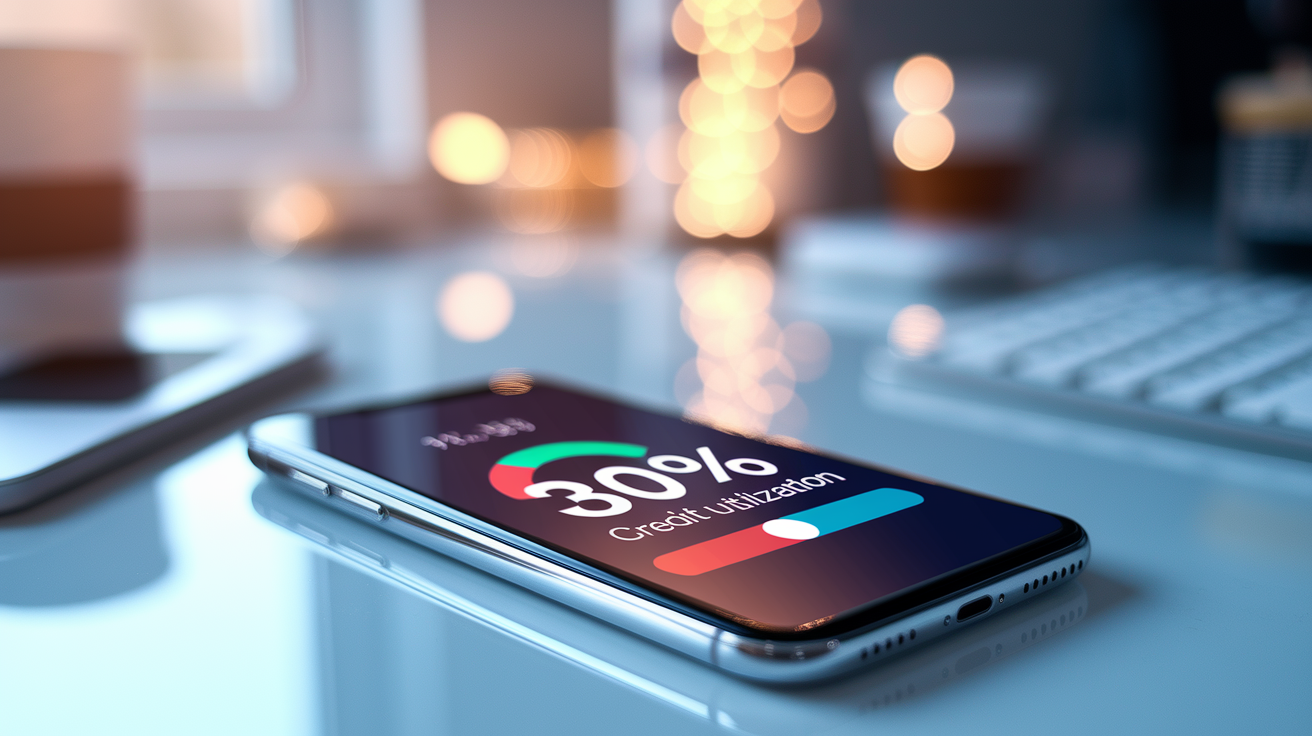
Scoring models treat utilization as one of the biggest single pieces of your credit profile. The ratio shows up on each individual card and across all your revolving lines combined. Bureaus pull the balance from your statement closing date, so if you pay down a card on the 16th but your statement closes on the 20th and you charge $100 in between, that new charge counts.
Staying under 30 percent is the acceptable baseline. Under 10 percent is where you’ll see the fastest score gains. A $1,000 limit with a $300 balance equals 30 percent. Drop that balance to $100 and you hit 10 percent. A $5,000 limit with a $1,500 balance is 30 percent. Same limit with a $500 balance is 10 percent.
Utilization moves fast both ways. Pay down a card by $500, and the next reported cycle shows the drop. That speed makes utilization one of the easiest score levers you can actually control, as long as you understand when your issuer reports and manage balances before they send data to the bureaus.
Payment Timing Techniques to Lower Utilization Fast
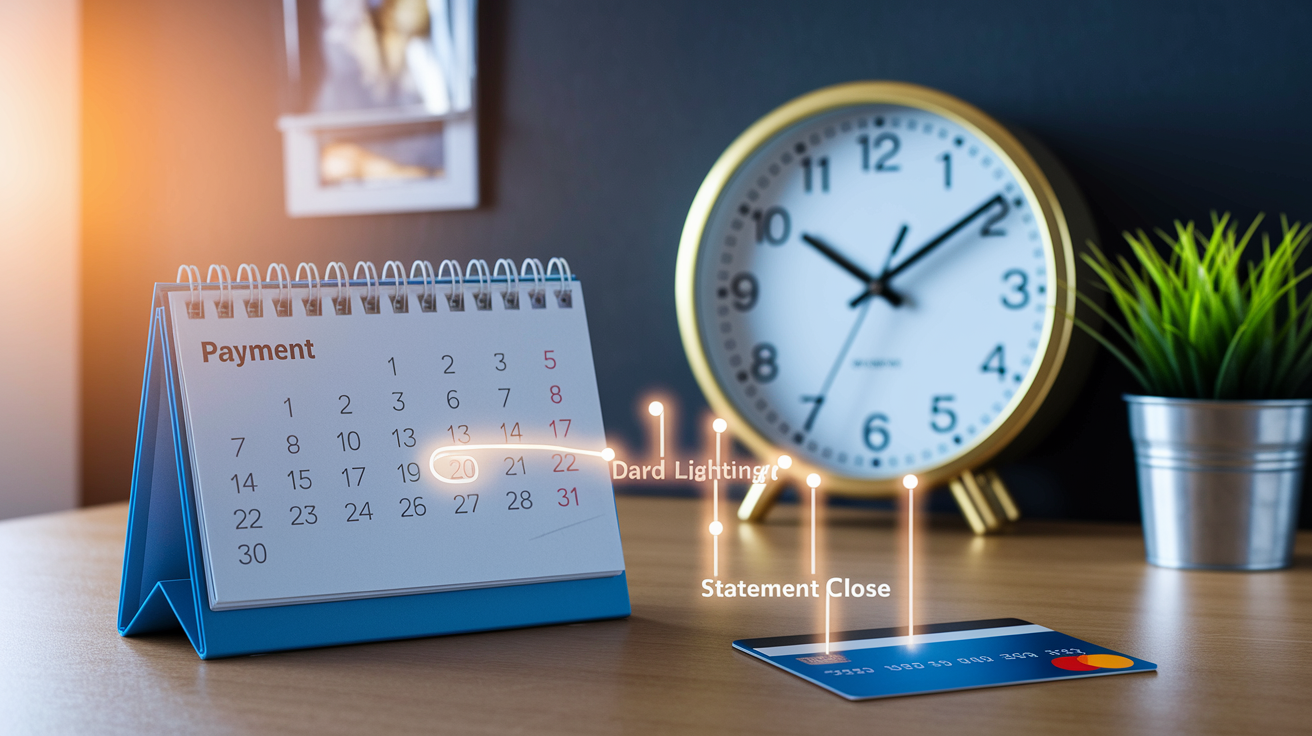
The date your issuer reports matters way more than the due date. Most issuers send account information to the credit bureaus around the statement closing date, which is usually a few weeks before your payment is due. Wait until the due date to pay, and that higher balance has already been reported and already dinged your score for that month.
Paying one to three days before the statement closes drops the balance that appears on your credit file. If your statement closes on the 15th, pay on the 12th or 13th so the lower balance posts before the issuer reports. Paying two to four times per month spreads reductions across the billing cycle and stops balances from spiking near the close date.
Here are five timing tactics to keep reported balances low:
Find your statement close date. Log in to your account or call the issuer. The statement date usually shows at the top of your monthly statement PDF.
Set a calendar reminder 3 days before close. Make a payment on that date so the lower balance appears on the statement.
Use biweekly payments. If you get paid every two weeks, schedule automatic payments every pay period. This keeps your balance below thresholds all month long.
Pay immediately after each purchase. Log in the same day or the next morning and pay off the charge. Works best if you check your account often and pending transactions post quickly.
Check for pending charges before statement close. Pending transactions can take one to three business days to post. If you’re planning to pay before the close date, confirm the transactions have posted or factor in the pending amount.
Using Credit Limit Strategies to Reduce Utilization Without Closing Cards
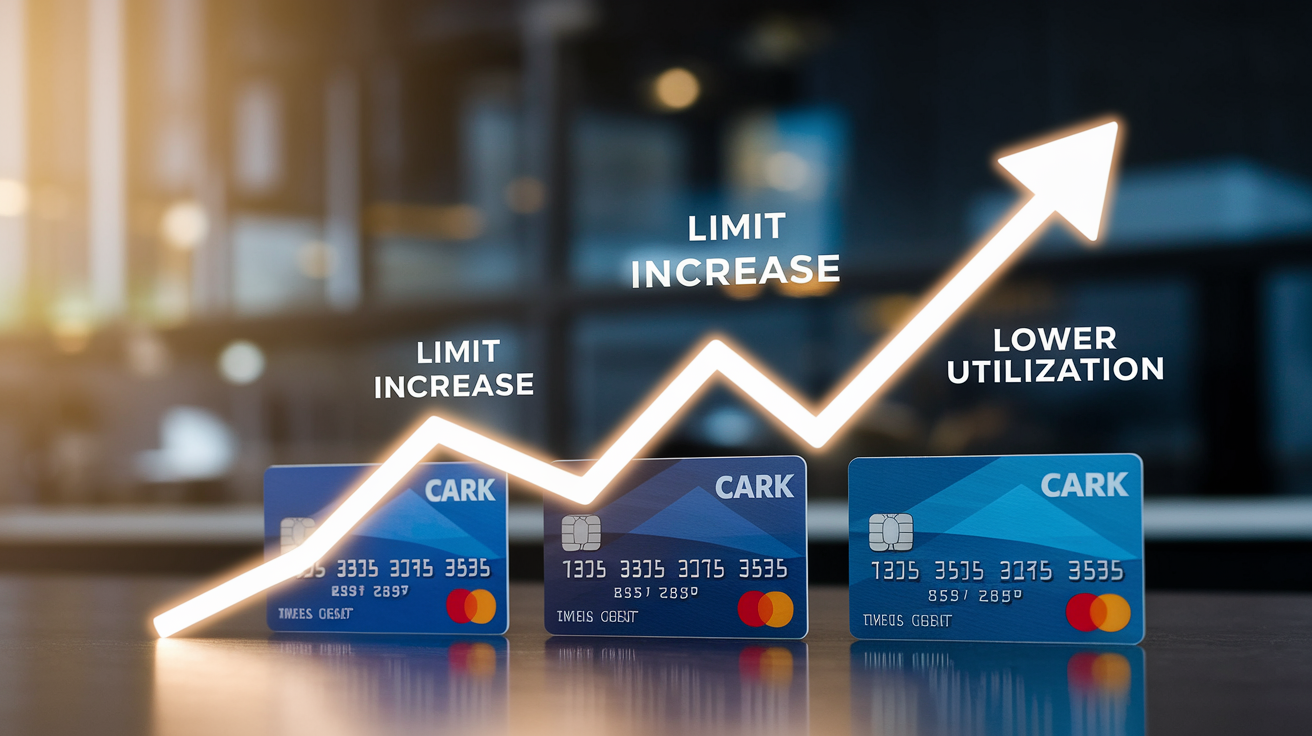
Raising your total available credit lowers utilization instantly if balances stay the same. A $2,000 balance on a $5,000 limit is 40 percent. Same $2,000 balance on a $10,000 limit drops to 20 percent. Issuers might approve limit increases of 10 to 50 percent, depending on your payment history, income, and time since the last increase.
The catch is that some issuers use a hard credit inquiry to evaluate your request. A hard pull can knock your score down a few points temporarily, and that drop might last a few months. Other issuers use soft pulls, which don’t touch your score at all. If you’re not sure which type of inquiry your issuer uses, ask before you submit the request. If you’re close to applying for a mortgage or auto loan, hold off until after you close that loan.
Limit increases also depend on issuer confidence. Missed payments or high balances for months at a time? Your issuer might deny your request or offer a smaller increase than you asked for. But if you pay on time and keep utilization low, issuers often approve increases every six to twelve months. Income increases, new employment, or moving from part time to full time can all support a higher limit.
How to Request a Limit Increase Without Hurting Your Score
First, contact your issuer to confirm whether they use a soft or hard inquiry. Many issuers disclose this in the online limit increase request form or in the terms before you submit. If a hard inquiry is required, weigh the short term score impact against the long term utilization benefit. A temporary drop of a few points is worth it if you need to go from 50 percent utilization to 20 percent.
Follow these four steps to request a limit increase:
-
Log in to your online account and look for a “request credit limit increase” link. Most major issuers offer online requests. Don’t see the option? Call the number on the back of the card and ask.
-
Provide updated income information if requested. Issuers often ask for your total annual household income. Include salary, self employment income, and any regular household income you can reasonably access.
-
Ask if the inquiry will be soft or hard. If the representative doesn’t volunteer the information, ask directly. If it’s a hard pull and you want to avoid it, you can cancel the request before it’s submitted.
-
Accept a smaller increase to avoid a hard pull, if offered. Some issuers offer automatic soft pull increases of 10 to 15 percent without requiring additional review. If that option exists, take it and request another increase in six months.
Distributing Balances Across Cards to Keep Utilization Low
Scoring models evaluate utilization both overall and on a per card basis. A single card at 60 percent utilization can hurt your score even if your overall utilization is under 30 percent. Spreading charges across multiple cards stops you from pushing any one account into high utilization territory. Instead of charging $500 to a card with a $1,000 limit (50%), split the $500 across two cards with $1,000 limits each. That’s $250 on each card for 25% utilization per card.
This strategy requires keeping track of balances and due dates across multiple accounts. Set up autopay for at least the minimum payment on every card to avoid late payments, then make manual extra payments to the cards carrying higher balances. If you use three cards regularly, check all three balances before your statement closing dates and direct extra payments to whichever card is closest to 30 percent.
The table below shows how distributing the same total balance lowers per card utilization:
| Card | Limit | Example Balance Distribution |
|---|---|---|
| Card A | $1,000 | $250 (25%) |
| Card B | $2,000 | $500 (25%) |
| Card C | $1,500 | $375 (25%) |
In this example, $1,125 total balance across three cards keeps each card at 25 percent utilization and overall utilization at 25 percent. Putting the same $1,125 on Card A alone would push it to 112.5 percent utilization, which is over limit.
Balance Transfers & Installment Loan Options to Lower Revolving Utilization
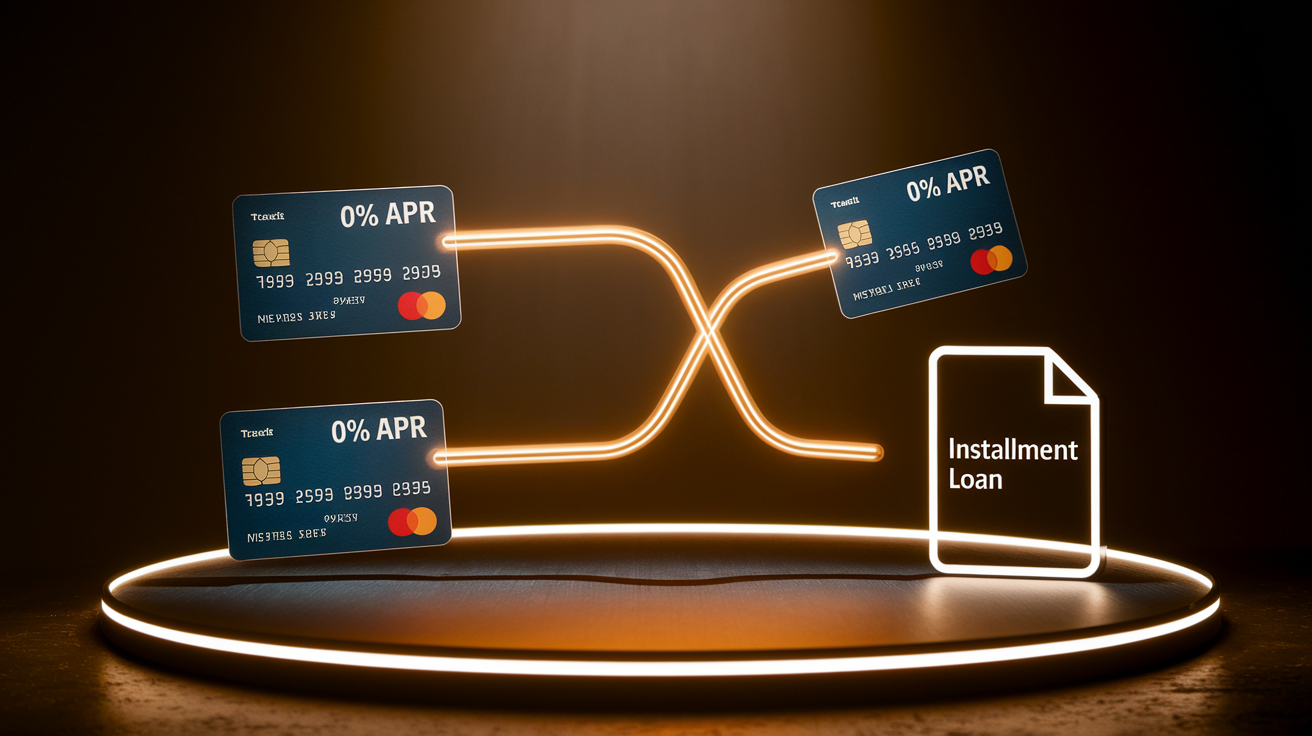
Balance transfer offers with 0 percent APR for 12 to 18 months let you move high interest balances to a new card and pay down principal aggressively without accruing interest. Transfers typically carry a fee of 3 to 5 percent of the amount transferred, so transferring $2,000 costs $60 to $100 up front. This works when the interest savings over the promotional period exceed the transfer fee and you can pay off the balance before the regular APR kicks in.
Using an installment loan (personal loan, home equity line of credit, or auto refinance) to pay off credit cards removes the balances from your revolving utilization calculation. Installment debt gets tracked separately from revolving credit, so a $5,000 personal loan that pays off three credit cards drops your revolving utilization to zero. The tradeoff is the monthly payment obligation, origination fees (typically 1 to 6 percent), and the hard inquiry when you apply. Run the numbers to confirm the new monthly payment fits your budget and that the total cost of the loan is less than the interest you would have paid on the cards.
Balance transfers and installment loans both require strong enough credit to qualify and enough income to afford the new payment. If your score is already low, you might not qualify for a 0 percent transfer or a personal loan with a competitive rate. In that case, stick with the payment timing and limit increase strategies described earlier until your score improves enough to qualify for better loan terms.
Before choosing one of these options, consider:
Transfer fees and origination fees. Add these to the total cost and compare against the interest savings.
Promotional term length. A 12 month 0 percent offer requires higher monthly payments than an 18 month offer to pay off the balance in time.
Hard inquiry impact. Both balance transfer cards and personal loans typically trigger a hard pull. If you’re planning to apply for a mortgage within the next six months, delay the application.
Monthly payment affordability. Installment loans create a fixed monthly obligation. If your income fluctuates or you have irregular business revenue, confirm you can make the payment in slow months.
Keeping Cards Open and Active Without Raising Utilization

Closing credit cards shrinks your total available credit and shortens your credit history if you close an older account. The immediate effect is higher utilization on your remaining cards, even if you don’t charge another dollar. If you have $3,000 in total limits and close a $1,000 limit card, you now have $2,000 in limits. A $600 balance was 20% utilization. Now it’s 30%.
Keep every card open, especially the oldest one. Use each card for a small recurring charge once per month (streaming service, phone bill, or a $5 subscription) and set up autopay to pay it off. This keeps the issuer from closing the account for inactivity and keeps the account age and available credit on your credit file. If a card has an annual fee you no longer want to pay, call the issuer and ask to downgrade to a no fee version of the card instead of closing it.
Simple steps to maintain open cards without increasing balances:
Set a $1 to $5 recurring charge on each card. Use one card for Netflix, another for iCloud storage, another for a monthly charity donation.
Enable autopay for the full statement balance. The charge and payment cycle keeps the account active and reports on time payments every month.
Check for issuer inactivity policies. Some issuers close cards after 12 to 24 months of no activity. A single monthly charge prevents closure.
Monitoring, Alerts, and Reporting Dates to Control Utilization Month to Month

Utilization changes every billing cycle as balances and payments post. Issuers typically report once per cycle, and most report the balance on your statement closing date. Check your credit report mid cycle and the balance shown might not match your current balance. It reflects the last reported statement balance. Monitoring utilization before major purchases or loan applications helps you time payments so the lowest balance appears on your file when lenders pull your credit.
Set up account alerts through your card issuer’s app or website. Most issuers let you enable alerts for balance thresholds, payment due dates, and statement closing dates. A balance alert at 20 percent utilization on each card gives you time to make an extra payment before the statement closes. Statement close alerts remind you to pay down balances one to three days before the issuer reports.
Check your credit report at least once per quarter through AnnualCreditReport.com or a free credit monitoring service. Confirm that the reported balances match your expectations and that all payments are marked on time. If a balance seems wrong or a payment is missing, contact the issuer immediately to resolve the discrepancy before it touches your score.
Follow this five step monthly checklist to maintain low utilization:
-
Find the statement close date for each card. Mark it on your calendar or set a recurring alert.
-
Check all balances 3 days before each statement closes. Log in to each account and review posted transactions and pending charges.
-
Make payments to bring each card below 30 percent (or 10 percent if possible) before the close date. Transfer funds from checking or pay directly from your bank account.
-
Review your credit report quarterly. Confirm reported balances and on time payment history.
-
Adjust recurring charges if any card approaches 30 percent utilization. Move subscriptions to a different card or pay them off immediately after posting.
Final Words
Get practical: use payment timing, multiple payments, and prepaying before the statement close to cut the balance that gets reported. Request modest credit-line increases and split charges so no single card spikes.
If you need more time, consider a balance transfer or a small installment loan. Keep old cards active with tiny recurring charges and immediate payoffs. Watch statement closing dates and set alerts.
These steps show how to lower credit utilization without closing credit cards while protecting your score. Small changes make a real difference. You can do this.
FAQ
Q: How to decrease credit utilization quickly?
A: Decreasing credit utilization quickly involves paying down balances before the statement closing date, making multiple payments each month, requesting a credit-limit increase (soft pull when possible), or moving debt to a low-rate balance transfer.
Q: What is the 2 3 4 rule for credit cards?
A: The 2 3 4 rule for credit cards isn’t a standardized industry rule; people use it differently. Instead, follow concrete steps: keep utilization under 30% (ideally under 10%), pay before statement close, and spread charges.
Q: Is $30,000 in credit card debt a lot?
A: Having $30,000 in credit card debt is a large amount for most people; it brings high interest and repayment risk. Check if monthly payments exceed a safe share of income and consider consolidation or a repayment plan.
Q: What is the biggest killer of credit scores?
A: The biggest killer of credit scores is late or missed payments. Payment history is the largest scoring factor, so avoid delinquencies, set autopay, and contact creditors promptly if you fall behind.