


Paying down debt first is not always the smartest move.
It depends on the math, what your debt costs you versus what your savings earn, and whether an unexpected bill would force you to borrow at a much higher rate.
This short, practical framework gives clear thresholds: start with a small emergency cushion, attack debts with much higher rates than savings, then beef up reserves when rates are close or income is unstable.
Use it to pick one simple next step today, so you stop guessing and start making measurable progress.
A Step-by-Step Framework to Prioritize Emergency Savings vs. Debt Reduction

The choice between saving for emergencies and paying down debt isn’t complicated once you see the real forces at work: what your debt costs you versus what your savings earn, and whether you can handle an unexpected bill without borrowing again. A clear framework gives you thresholds you can measure and a sequence you can repeat no matter how your situation shifts.
In early 2026, credit cards are running 20 to 24 percent while high-yield savings sit around 4 to 5 percent. That 15 to 19 point spread is your signal. It tells you where extra cash should go. The framework builds a small cushion first so you don’t end up borrowing for emergencies while you’re trying to kill off what you already owe.
You move through four stages. First, build a basic buffer to stop new high-interest borrowing. Second, compare each debt’s rate to what your money earns in savings. Third, adjust for job stability and risks you see coming. Fourth, decide whether to split your cash between both goals. The sequence flexes. If your income’s shaky or a debt rate’s extreme, you skip or speed up a step.
This works whether you make 40,000 or 140,000 a year. Whether you’re carrying student loans, credit cards, a mortgage, or all three. The math changes, but the logic doesn’t.
- Build a small liquidity buffer of $1,000 or one month of expenses before you go hard on payoff.
- Compare each debt’s interest rate to the current high-yield savings rate (around 4 to 5 percent in 2026).
- Pay off any debt with a rate significantly higher than your savings yield, especially anything above 10 to 15 percent.
- Beef up your emergency fund when your debts carry low rates (under 5 percent) or when your income’s variable or at risk.
- Use a hybrid split (like 70 percent to debt and 30 percent to savings) when both priorities need attention and neither one wins outright.
Key Criteria That Drive Your Emergency Fund vs. Debt Payoff Decision

Interest rate differences create urgency. When a credit card charges 22 percent and your savings earn 4 percent, every dollar you leave on that card costs you 18 cents a year more than saving it would earn. The wider the gap, the harder debt payoff should pull. When the gap narrows, say a 7 percent student loan versus 5 percent savings, the case for aggressive payoff weakens. Building reserves starts to matter more.
Income stability changes things fast. If you’re salaried with steady hours, six months’ unemployment risk looks different than if you’re freelancing with three clients and one just went quiet. Unstable income, single-income households, people in industries with high layoff risk… they need larger emergency cushions before pouring extra cash into debt. If your next paycheck could vanish with two weeks’ notice, liquidity beats interest savings.
Liquidity needs also include predictable near-term expenses. A car that’s dying, upcoming surgery with a high deductible, a lease renewal where rent could jump. These aren’t true emergencies, but they act like them if you don’t have cash ready. High-interest debt is urgent, sure. But not if paying it down today forces you to borrow at an even higher rate next month.
High urgency: Debt rates 15 percentage points or more above savings yields, or debt growing faster than you can shrink it with minimum payments.
Income volatility signals: Freelance income, commission pay, seasonal work, single-income household, recent company layoffs, or industry contraction.
Timing of expected costs: Major expense within six months (car repair, medical procedure, moving costs) that savings can’t currently cover.
Emotional pressure: Debt balance causing sleep disruption, relationship strain, or decision paralysis. Sometimes faster payoff reduces total life cost even when the math says save.
Starter Emergency Fund Rules Before Aggressive Debt Reduction
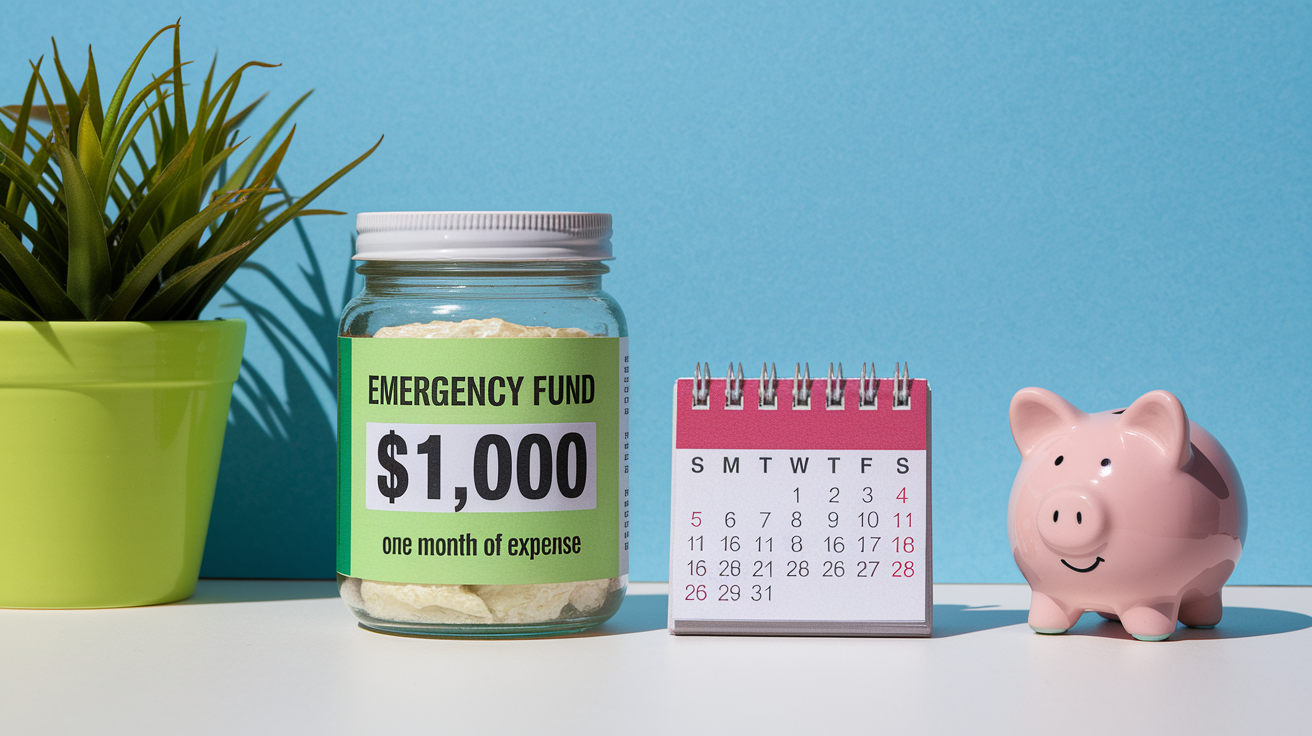
The starter fund exists to keep you from taking on new high-interest debt while you pay off the old stuff. Without it, a surprise $800 car repair gets charged to the card you’re trying to eliminate. You lose ground. The rule’s simple: save $1,000 or one month of essential expenses, whichever’s larger, before you send extra payments to debt. During this phase, you still make every minimum payment. But extra cash goes to the buffer until you hit the target.
Once high-interest debts are cleared, you build the full fund to three to six months of expenses. Store it in a high-yield savings account earning the current 4 to 5 percent. If your income’s volatile or your job security’s weak, stretch the target to nine to twelve months before you shift focus to investments or lower-rate debt.
| Target Level | When It Applies | Rationale |
|---|---|---|
| Starter ($1,000 or 1 month of expenses) | Before aggressive debt payoff begins | Prevents new borrowing for small emergencies; maintains forward progress on debt reduction |
| Standard (3–6 months of expenses) | After high-interest debt elimination; stable income, dual-income household | Covers typical job loss, major repair, or medical event without liquidating investments |
| Extended (9–12 months of expenses) | Freelancers, commission earners, single-income households, volatile industries | Absorbs longer job-search periods and income gaps without forced asset sales or new debt |
Categorizing Debt to Inform Your Prioritization Framework
Not all debt deserves the same treatment. The interest rate and the loan structure tell you whether paying it off early saves you real money or just creates an illusion of progress. Categorizing lets you direct extra cash to the debts that cost the most. You avoid wasting effort on debts that are cheap to carry.
High-Interest Debt
Credit cards and payday loans sit here. Rates between 20 and 24 percent in early 2026, some higher. Carrying a $5,000 balance at 22 percent costs you about $1,100 a year in interest if you’re only making minimum payments. Every month you delay, the balance grows. The psychological weight increases. These debts should be your first target after you hit the starter emergency fund. The cost of waiting is measurable and steep.
Medium-Interest Debt
Student loans and personal loans often fall between 7 and 8 percent. Some car loans sit in this range too. The tradeoff here’s less obvious. A 7.5 percent loan costs more than a savings account earns, but not by the margin that makes aggressive payoff urgent. If your job’s stable and your emergency fund’s thin, building reserves competes evenly with extra payments. If your income’s variable or you’re in a high cost of living area where six months of expenses is a large number, medium-interest debt can wait while you finish the full fund.
Low-Interest Debt
Mortgages under 5 percent and some subsidized federal student loans sit here. The interest cost’s lower than long-term stock market returns. Often close to or below inflation. Paying these off early usually means giving up investment growth or liquidity without a meaningful reduction in financial risk. Once your emergency fund’s full and high-rate debts are gone, extra payments to a 3.5 percent mortgage rarely improve your financial position as much as retirement contributions or taxable investments do.
Choosing the Right Debt Payoff Method for Your Situation

Once you’ve decided to prioritize payoff, the next choice is sequence. Two methods dominate: Debt Avalanche and Debt Snowball. Both require you to make minimum payments on every debt, then direct all extra cash to one target. The difference is which debt gets the extra payment.
Debt Avalanche attacks the highest interest rate first, regardless of balance. You list your debts by rate, pay minimums on everything, throw extra money at the top rate until it’s gone. Then you roll that payment into the next highest rate. Mathematically, this saves the most interest over time. If you have a $3,000 card at 24 percent and a $6,000 card at 18 percent, Avalanche says hit the 24 percent card first, even though the balance is smaller. You eliminate the most expensive debt fastest.
Debt Snowball ignores rates and targets the smallest balance first. You list debts by size, pay minimums on all, send extra cash to the smallest debt until it’s eliminated. Then you roll that payment into the next smallest balance. The wins come faster. Clearing a $1,200 balance feels like progress even if a $6,000 balance at a higher rate’s still sitting there. Snowball trades interest cost for momentum. For people who need visible wins to stay consistent, the tradeoff’s worth it.
| Method | Best For |
|---|---|
| Avalanche (highest rate first) | Minimizing total interest paid; disciplined planners who can sustain effort without frequent wins |
| Snowball (smallest balance first) | Building momentum and adherence; people who need quick progress to stay motivated; households recovering from financial shock |
When to Shift From Debt Payoff to Building a Full Emergency Fund

The shift point’s clear: when your high-interest debt’s eliminated, redirect the cash you were sending to payoff into your emergency fund until it reaches three to six months of expenses. High-interest means anything above 10 to 15 percent in the current rate environment. Credit cards, most personal loans, payday debt. Once those are gone, the urgency drops. Liquidity becomes the higher priority.
If your income’s stable and you have a partner who also works, three to six months is enough. If you’re self-employed, work on commission, or your industry’s seen layoffs in the past year, push the target to nine or twelve months before you shift focus again. Keep the fund in a high-yield savings account earning 4 to 5 percent so it grows while it sits. But don’t lock it in a CD or investment account where you can’t access it fast.
The transition doesn’t have to be instant. If medium-interest debt remains, say a 7.5 percent student loan, you can use a hybrid approach while building the full fund. Split extra cash between savings and the remaining debt. But high-interest debt should be gone before you prioritize anything else. The interest cost of delay’s larger than the benefit of a bigger emergency cushion.
A Hybrid Approach: Allocating Extra Cash Between Savings and Debt
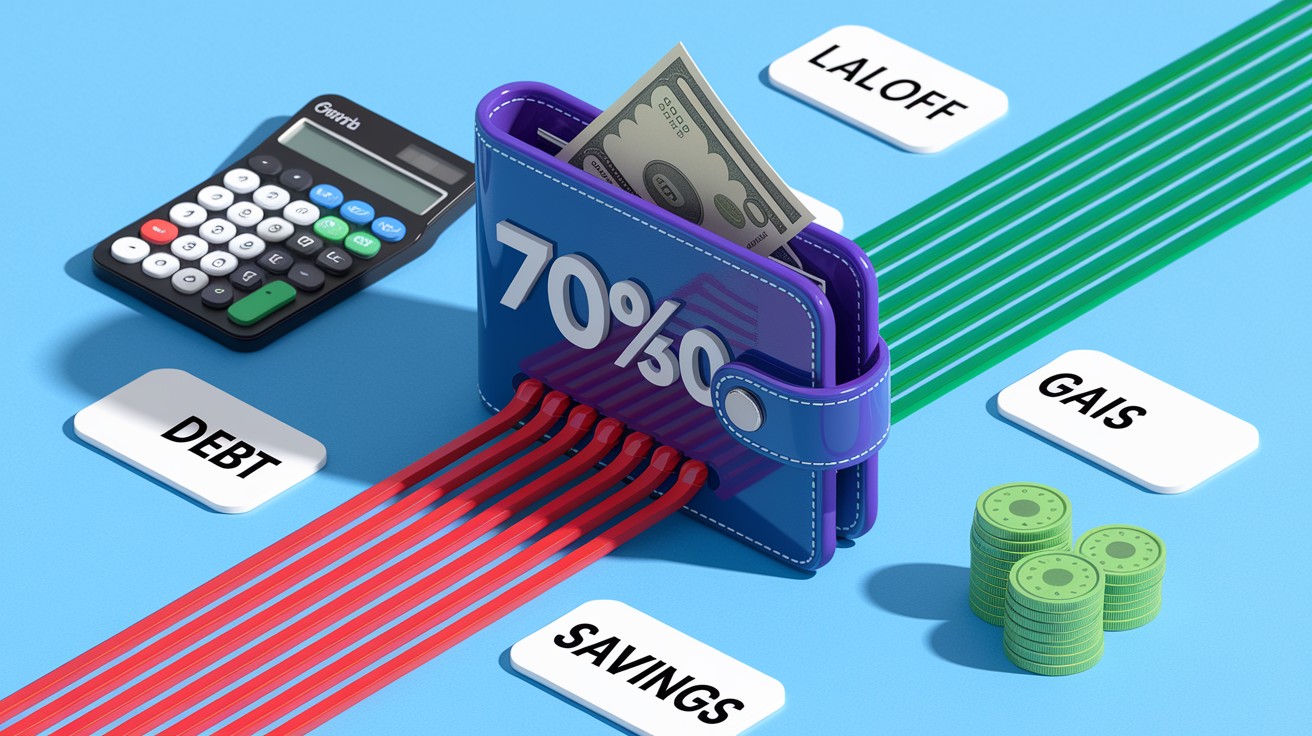
A hybrid split works when the interest rate gap’s moderate and both priorities matter. If your credit card’s at 14 percent and savings earn 5 percent, the case for payoff’s strong but not overwhelming, especially if your emergency fund’s thin. Splitting the difference, say 70 percent to debt and 30 percent to savings, lets you make measurable progress on both fronts without leaving yourself exposed to new borrowing.
The exact split depends on the rate gap and your risk tolerance. A 20 point gap (22 percent debt versus 4 percent savings) pushes the allocation heavily toward debt. Maybe 90 percent or even 100 percent after the starter fund’s in place. A 5 point gap (8 percent debt versus 5 percent savings) invites a more balanced split, especially if job security’s uncertain or large expenses are likely. The key is to set the allocation deliberately, not drift between goals month to month based on how you feel.
- Calculate the interest rate spread between your highest priority debt and your savings yield. This is the cost of choosing savings over payoff.
- Set a percentage allocation that reflects both the numeric gap and your risk exposure. Use 70/30 (debt/savings) as a default and adjust based on urgency.
- Automate the transfers so the split happens without monthly decisions. Schedule one transfer to extra debt payments and another to your high-yield savings account on the day after payday.
Real-World Scenarios Applying the Prioritization Framework

Three scenarios show how the framework adapts to different debt mixes, income levels, and goals. The logic stays the same. But the sequence and allocation shift based on rates and circumstances.
Scenario A: You have no emergency savings, a $5,000 credit card balance at 22 percent, and $400 a month in extra cash after covering minimums and essentials. The framework says build the starter fund first. At $400 a month, you hit $1,000 in about two and a half months. After that, redirect the full $400 plus the card’s minimum payment to the 22 percent balance until it’s eliminated. The 18 point gap between the card rate and savings (22 percent minus 4 percent) makes aggressive payoff the clear priority once you’ve built the small liquidity buffer.
Scenario B: You have a $1,200 starter fund saved, a $4,000 credit card at 14 percent, a $9,000 student loan at 7.5 percent, and $500 a month extra. Your starter fund’s in place, so you move to rate comparison. The 14 percent card’s 10 points above savings and 6.5 points above the student loan, so you target it first with the full $500 until it’s cleared. Then you shift to the student loan. The 7.5 percent loan’s only 2.5 points above savings, so once the card’s gone you could split between finishing the student loan and building your full emergency fund. Maybe 60 percent to the loan and 40 percent to savings, especially if your job stability’s uncertain.
Scenario C: You have a $220,000 mortgage at 3.5 percent, an employer 401(k) with a 4 percent match on the first 6 percent you contribute, and no emergency fund. Your extra monthly cash is $600. The framework says save the starter fund first. $1,000 takes about two months at $600 a month. Then contribute to the 401(k) up to the match (6 percent of your salary) because the match is an immediate, guaranteed return that beats every other option. After securing the match, redirect remaining extra cash to building the full emergency fund (three to six months of expenses). The 3.5 percent mortgage rate’s below both savings yields and expected investment returns, so extra mortgage payments don’t make sense until retirement contributions are maxed and emergency reserves are full.
| Scenario | Debt Mix | Recommended Priority Sequence |
|---|---|---|
| A: No savings, high-rate card, $400/month extra | $5,000 credit card at 22% | 1) Save $1,000 starter fund (~2.5 months); 2) Attack 22% card with full $400+ until eliminated |
| B: Mixed debt, starter saved, $500/month extra | $4,000 card at 14%, $9,000 student loan at 7.5% | 1) Target 14% card first (rate advantage over loan and savings); 2) After card cleared, split or focus on 7.5% loan depending on income stability |
| C: Low mortgage, 401(k) match available, no fund | $220,000 mortgage at 3.5% | 1) Save $1,000 starter; 2) Contribute to 401(k) up to employer match; 3) Build 3–6 month emergency fund; 4) Consider extra mortgage payments only after retirement and reserves are solid |
Final Words
Compare interest rates and your cash cushion first—it’s the simplest way to decide where extra money should go.
This post walked through a practical framework: starter emergency fund, rate comparison, debt categories, payoff methods, when to shift, hybrid splits, and real scenarios.
Start with a starter fund, then compare rates, sort debts, pick a payoff method, and use a hybrid when both needs matter.
Use the framework for prioritizing emergency fund vs debt payoff to pick a plan—build a $1,000 starter buffer, target high-rate cards, or use a 70/30 split. Small steps will steady your cash while cutting costly interest.
FAQ
Q: Should I prioritize emergency fund or paying off debt?
A: Deciding whether to prioritize an emergency fund or paying off debt depends on liquidity and interest rates: build a starter buffer ($1,000 or one month), then tackle high-rate debt (20–24%); use a hybrid split if needed.
Q: What is the 3 6 9 rule for emergency fund and for money?
A: The 3-6-9 rule for emergency funds means aim for 3 months of expenses if very stable, 6 months for most households, and about 9 (to 12) months if your income is unstable or work is volatile.
Q: What is the 70/20/10 rule money?
A: The 70/20/10 rule for money means allocate about 70% to living expenses, 20% to savings or investing, and 10% to debt repayment or short-term goals; tweak the split to match your priorities.