

What if your monthly mortgage payment jumps by $350 overnight—could your budget survive?
When the Fed lifts rates, borrowing costs for mortgages, car loans, and credit cards rise fast, and many households feel the squeeze in weeks, not months.
This post explains how those rate moves change monthly cash flow, which expenses usually get cut, what parts of your budget can actually help (savings yields), and simple steps to protect your cash.
You’ll get clear tradeoffs, quick math, and a three-step checklist to act now.
Immediate Household Budget Impact of Rising Interest Rates

When the Fed bumps the funds rate, the prime rate usually follows within days. And households feel it fast, through variable-rate debt and new loan pricing. A $300,000 thirty-year fixed mortgage signed at 3.5 percent costs about $1,347 per month. At 5.5 percent? That same loan jumps to around $1,703 monthly. That’s $356 more each month, $4,275 over a year. It forces families to rethink everything from grocery budgets to vacation plans. Auto loans follow the same pattern: a $25,000 car financed over sixty months at 4 percent runs about $460 monthly, but at 7 percent it climbs to roughly $496. That’s $36 each month and more than $2,100 in extra interest over the life of the loan.
Credit cards track prime rate changes, so a $5,000 revolving balance with an APR rising from 16 percent to 17 percent costs an additional $4.16 every month. Around $50 a year before compounding kicks in. That might sound modest. But it stacks with increases across mortgages, car notes, and home equity lines. The cumulative effect can easily reach hundreds of dollars in monthly cash outflow. Households carrying balances on multiple variable-rate products often see their minimum payments climb together, compressing discretionary spending and forcing rapid budget reallocations.
The immediate budget impact hits these major categories:
Mortgages: Adjustable-rate products reset higher, new fixed-rate originations cost more each month.
Auto loans: Higher rates increase monthly payments and total interest, especially on longer terms.
Credit cards: Variable APRs track prime, adding interest expense to every billing cycle.
Home equity lines and personal loans: Rates tied to prime increase minimum payments as soon as the Fed moves.
Savings accounts and CDs: Yields rise, creating a partial offset for savers but not enough to cover higher borrowing costs for most households.
How Interest Rate Changes Drive Mortgage Payment Increases

Fixed-rate mortgages lock the interest rate at closing. So a household that signed a thirty-year note at 3.5 percent continues paying $1,347 monthly on a $300,000 loan regardless of what the Fed does later. That stability is the main reason fixed-rate products dominate U.S. home finance. Adjustable-rate mortgages reset at scheduled intervals, usually annually after an initial fixed period. When rates climb, the new payment can jump by hundreds of dollars overnight. A borrower who started with a 5/1 ARM at 3 percent might reset to 5.5 percent after five years, pushing the monthly payment higher and often catching households off guard if they didn’t budget for the adjustment.
Refinancing becomes attractive when rates fall. It lets homeowners swap a higher-rate note for a cheaper one, but the math requires careful attention to closing costs and breakeven timelines. Lender fees, title insurance, and appraisal charges can total several thousand dollars. So a refinance only makes sense if the monthly savings multiplied by the months you plan to stay in the home exceeds those upfront costs. When rates are rising, refinancing offers disappear. Homeowners with adjustable products face limited options beyond making extra principal payments or enduring the higher monthly bill.
| Loan Amount | Monthly Payment at 3.5% | Monthly Payment at 5.5% | Monthly Increase |
|---|---|---|---|
| $200,000 | $898 | $1,136 | $238 |
| $300,000 | $1,347 | $1,703 | $356 |
| $400,000 | $1,796 | $2,271 | $475 |
Consumer Loans and Credit Card Costs During Rate Hikes
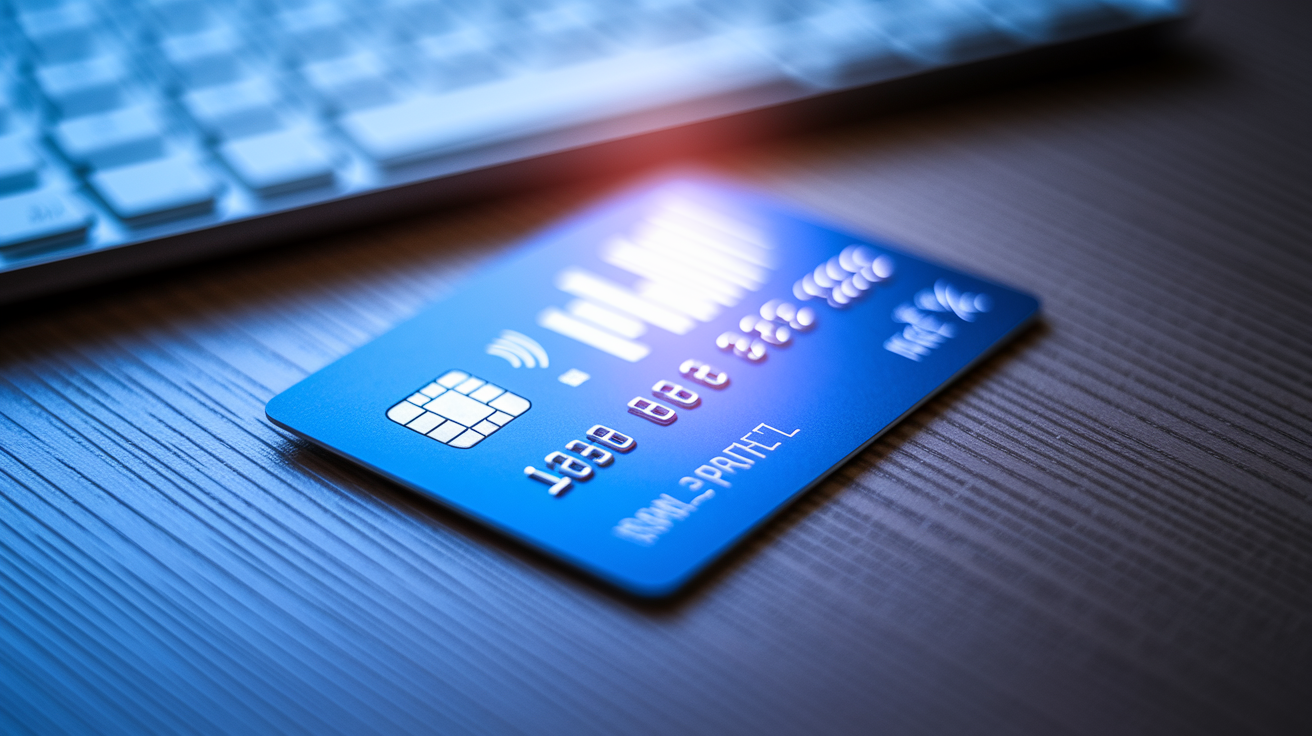
Auto loans and personal installment debt react faster than mortgages because terms are shorter and lenders reprice more frequently. A $25,000 car loan financed over sixty months at 4 percent costs about $460 each month and racks up roughly $2,625 in total interest. But the same loan at 7 percent jumps to $496 monthly with around $4,741 in interest over five years. That extra $36 every month may not break most budgets. But when added to mortgage increases and higher credit card minimums, the combined effect forces hard choices about other spending.
Credit cards are almost always variable-rate products tied to prime. So a one-percentage-point Fed increase usually translates to a one-point APR increase on your balance within one or two billing cycles. A $5,000 balance at 16 percent accrues about $66.67 in interest each month if you make no payments. At 17 percent it climbs to $70.83, adding roughly $50 over a year before compounding. Introductory zero-percent offers typically last twelve to twenty-four months. When the promotional window closes, the rate can reset to the issuer’s standard variable APR, often 18 percent or higher, creating a payment shock if you haven’t paid down the balance.
Managing debt during rate hikes requires focused prioritization:
Pay down highest-APR balances first. Credit cards and payday-style loans cost the most and respond immediately to rate increases.
Make extra principal payments. Even small additional amounts reduce the balance faster and cut total interest.
Avoid new revolving debt. Every new balance starts accruing at the higher variable rate.
Consider consolidation loans. A fixed-rate personal loan may offer a lower APR than multiple credit cards, locking in predictable payments.
Savings Benefits and Opportunities from Higher Rates
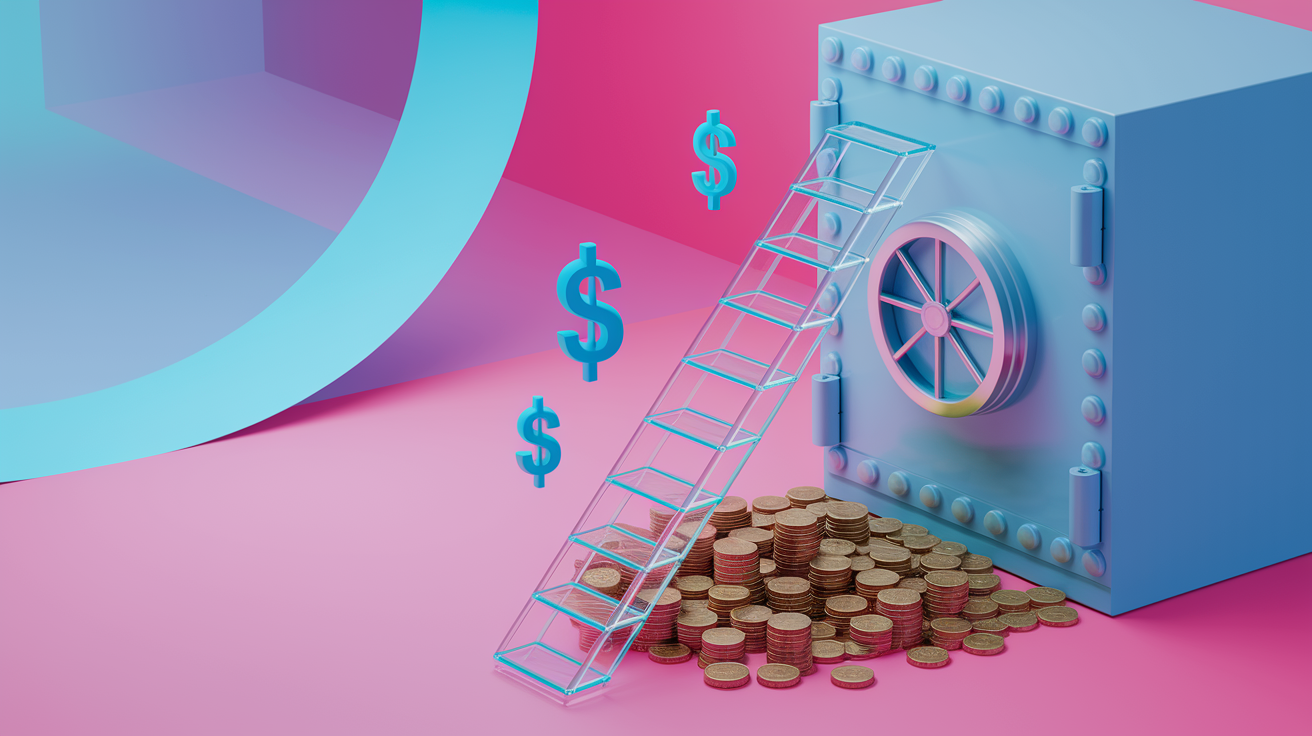
When the Fed pushes rates higher, banks compete for deposits by raising yields on savings accounts, money market accounts, and certificates of deposit. A $20,000 balance earning 0.5 percent annual interest generates only $100 over a year. But at 2.5 percent the same deposit returns $500, a $400 improvement that helps offset some of the pain from higher borrowing costs. High-yield online savings accounts often move faster than traditional brick-and-mortar institutions. Shopping around can capture an extra percentage point or more, translating directly to passive income with zero additional risk since deposits remain FDIC-insured up to applicable limits.
CD ladders let you lock in rising yields without tying up all cash in a single long-term certificate. By splitting funds across CDs maturing in six months, one year, eighteen months, and two years, you capture progressively higher rates as each certificate renews while maintaining regular access to portions of your savings. Bond prices generally fall when interest rates rise because existing fixed-coupon bonds become less attractive compared to new issues paying higher yields. A ten-year bond with duration around eight years can drop roughly 8 percent in price if market yields climb one percentage point. That creates a loss for investors who need to sell before maturity. Short-duration bond funds or individual bonds held to maturity reduce that price risk.
Move idle cash into higher-yield accounts. Compare current APYs across banks and credit unions to avoid leaving money in near-zero checking.
Use CD ladders to balance liquidity and yield. Stagger maturity dates so some principal becomes available regularly while capturing rising rates.
Keep bond duration short. Limit exposure to price swings by favoring bonds or bond funds with maturities under three years when rates are climbing.
Household Cash Flow Adjustments During Interest Rate Hikes
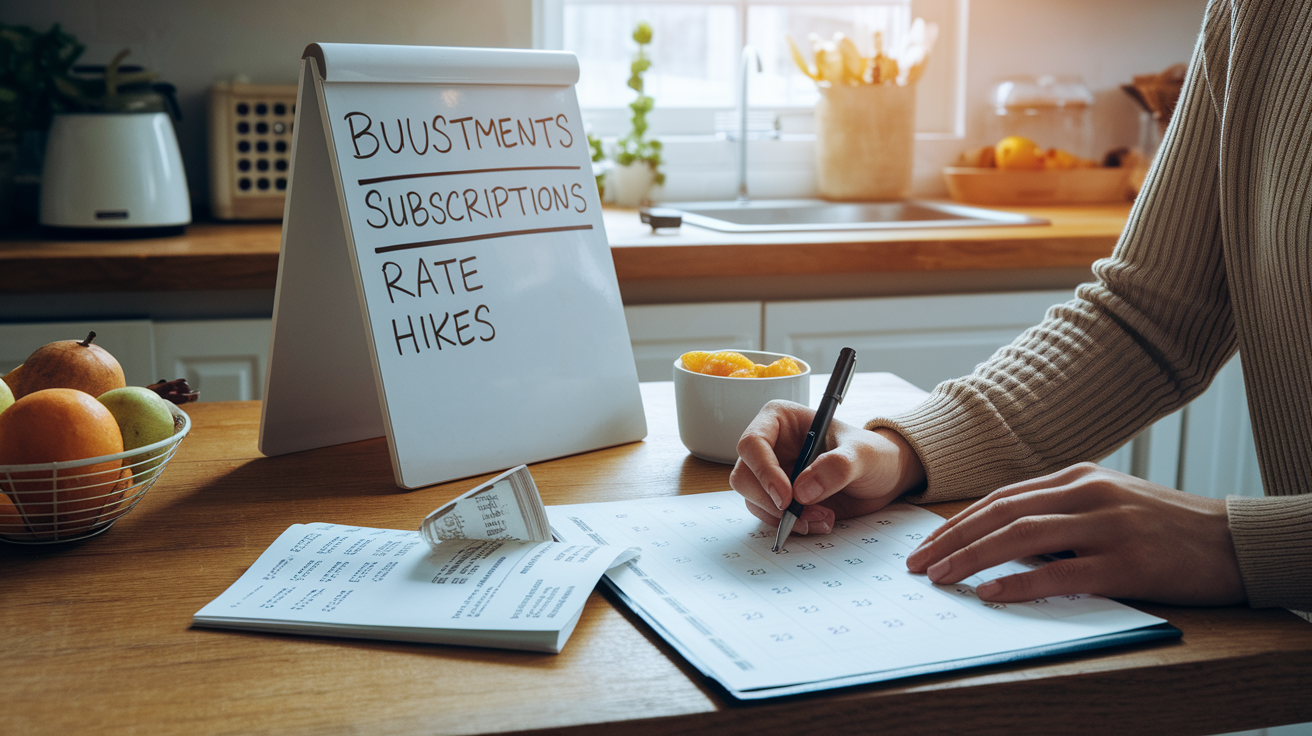
Rising debt payments squeeze discretionary spending. Households need to identify which monthly outlays can shrink or pause to cover the difference. If your mortgage payment climbs by $300 and your car loan adds another $40, you need to find $340 somewhere in the budget every month. Discretionary categories like dining out, subscription services, entertainment, and hobby spending are the first targets because essential bills are harder to cut without serious lifestyle changes. Trimming 5 to 10 percent from $1,200 in monthly discretionary spending frees up $60 to $120. That helps, but may not fully close the gap. It might require deeper reductions or temporary income boosts like overtime or a side project.
Emergency funds become critical during rate-hike cycles because cash reserves prevent forced borrowing when an unexpected car repair or medical bill arrives. A target of three to six months of essential expenses provides a cushion that lets you ride out payment increases without adding high-interest credit card debt. Building or topping up that fund should take priority over non-essential purchases, even if it means delaying a vacation or skipping an upgrade.
Stress-Testing Monthly Cash Flow
Run a worst-case scenario by adding $300 to $500 to your current monthly debt service and checking whether your take-home income still covers essentials plus a small margin for unexpected costs. If the simulation shows a shortfall, start cutting discretionary line items now rather than waiting for the actual payment shock. Identify variable expenses that can be paused or reduced immediately, and set a timeline to pay down the highest-rate debt so future rate increases have less impact.
Essential bills first. Mortgage, utilities, insurance, minimum loan payments, and basic food can’t be skipped without consequences.
Discretionary items next. Subscriptions, dining, entertainment, and non-urgent purchases should shrink when debt payments rise.
Build reserves before spending windfalls. Tax refunds, bonuses, or unexpected income should flow into emergency savings rather than immediate consumption during periods of rising rates.
Long-Term Budget Planning and Interest Rate Trends
The Federal Reserve adjusts the fed funds rate to balance inflation and economic growth. Raising rates when inflation runs too hot and lowering them when the economy needs stimulus. Consumer spending accounts for roughly 70 percent of U.S. economic activity, so higher borrowing costs slow household purchases, cool demand, and eventually bring inflation down. Rate cycles tend to last several years. A tightening phase might see multiple quarter-point or half-point increases over eighteen to twenty-four months, followed by a plateau, and eventually a cutting phase when inflation moderates or recession risks rise. Understanding this pattern helps households plan major purchases and debt decisions around the likely direction of rates rather than reacting month by month.
Historical context shows that rates rarely move in a straight line. Even during aggressive tightening cycles the Fed pauses to assess data before making the next move. Households that lock fixed-rate mortgages or auto loans near the peak of a rate cycle benefit from predictable payments while waiting for the next easing phase to refinance or take on new credit at lower cost. Tracking Fed announcements, employment reports, and inflation readings provides early signals. But the safest household strategy is to minimize variable-rate exposure and maintain cash reserves so you can act when opportunities appear rather than scrambling under financial pressure.
| Economic Condition | Typical Rate Direction |
|---|---|
| High inflation, strong job growth | Rising (Fed tightening to cool demand) |
| Low inflation, weak employment, recession risk | Falling (Fed easing to stimulate spending and borrowing) |
Practical Budgeting Strategies for Managing Higher Rates
Recalibrating a household budget during a rate-hike cycle starts with a full audit of current income, fixed obligations, variable debt payments, and discretionary outlays. List every monthly bill, loan payment, and recurring subscription, then calculate how much each debt payment will increase if rates climb another percentage point. That exercise shows your exposure and highlights which debts to attack first. Usually credit cards and other high-APR revolving accounts that respond immediately to Fed moves.
Emergency savings of three to six months of essential expenses act as a buffer. They let you absorb payment shocks without adding new high-interest debt or missing bills. Once the emergency fund reaches that target, redirect cash flow toward extra principal payments on the highest-rate loans. That reduces future interest sensitivity and frees up monthly budget room faster than spreading small payments across multiple balances. Tracking apps and simple spreadsheet templates make it easier to monitor spending week by week, flagging categories that creep above plan and catching subscription renewals or annual fees before they hit.
Follow these steps to recalibrate your budget for higher rates:
List all debts and current rates. Write down every loan, credit card, and line of credit with the current APR and monthly payment.
Calculate payment increases at higher rates. Model each debt at one or two percentage points higher to see worst-case monthly costs.
Identify discretionary cuts. Find $100 to $300 per month by trimming or pausing non-essential subscriptions, dining, and entertainment.
Build or top up emergency savings. Aim for three to six months of rent, utilities, minimum payments, insurance, and groceries in a high-yield savings account.
Prioritize high-APR debt payoff. Pay extra principal on credit cards and variable-rate loans first to reduce sensitivity to future hikes.
Review monthly and adjust. Set a calendar reminder every four weeks to compare actual spending against the plan and reallocate as rates or income change.
Final Words
Rising rates change monthly cash flow right away: mortgage payments can jump, auto and credit costs rise, and savings yields finally start to help. We showed numeric examples, mortgage sensitivity, debt-priority moves, and budget shifts to cover $300–$500 payment shocks.
Start by stress-testing your budget, prioritizing high-APR debt, and keeping a 3–6 month emergency fund.
This piece lays out clear choices about how interest rate hikes affect household budgets. You can make small moves now and keep your finances steady.
FAQ
Q: How do interest rate hikes affect my monthly household budget?
A: Rising interest rates affect your monthly household budget by raising loan and card payments while boosting some savings yields; for example, a $300,000 mortgage jump from 3.5% to 5.5% raises payments about $356/month.
Q: How much can my mortgage payment increase when rates rise?
A: A mortgage payment can increase significantly: a $300,000, 30-year loan rising from 3.5% ($1,347) to 5.5% ($1,703) raises your monthly payment by about $356.
Q: What’s the difference between fixed-rate and adjustable-rate mortgages during rate hikes?
A: Fixed-rate mortgages keep payments stable, while adjustable-rate mortgages rise with market rates at reset, causing payment shocks; consider locking a rate or testing affordability before an ARM reset.
Q: How do auto loans and credit cards respond to rising interest rates?
A: Auto loans and credit cards respond differently: a $25,000, 60-month auto loan rising 4% to 7% raises payments about $36/month; a $5,000 card balance with APR 16%→17% adds roughly $4/month.
Q: Can higher rates be good for my savings and how?
A: Higher rates can benefit savings: $20,000 at 0.5% yields $100/year versus 2.5% yields $500/year; consider CDs or laddering to lock better yields while minding liquidity trade-offs.
Q: What quick steps should I take to adjust my budget when rates rise?
A: Quick steps when rates rise: prioritize essentials, trim discretionary spending (5–10% frees about $120 if $1,200 spent), focus high-APR paydown, check refinancing, and boost emergency savings.
Q: How do I stress-test my monthly cash flow for higher interest costs?
A: Stress-test monthly cash flow by adding $300–$500 to projected debt costs, see which bills fail first, simulate a 20% revenue drop, and ensure 3–6 months of essential expenses in reserve.
Q: When should I consider refinancing a mortgage after rates rise?
A: You should consider refinancing when lower rates cut your monthly payment enough to recoup closing costs within 2–3 years; compare fees, break-even, and how long you plan to stay in the home.
Q: What are priority strategies to tackle higher-interest consumer debt?
A: Priority strategies for higher-interest consumer debt include paying highest-APR balances first, consolidating to lower-rate loans, making extra principal payments, and trimming revolving balances to reduce future rate sensitivity.