


Profits on a spreadsheet won’t keep your lights on.
Cash flow is the real fuel that pays payroll, vendors, and rent.
If money comes in slower than it goes out, growth stalls no matter how healthy your margins look.
This post lays out practical strategies, including rolling 13-week forecasts, faster invoicing, negotiated payables, lean inventory, value-based pricing, and selective short-term financing, to shift cash timing in your favor and support steady, sustainable expansion.
Core Techniques to Improve Cash Flow for Long‑Term Business Expansion

Cash flow is the capital that keeps operations moving. Businesses earning a profit on paper can still run out of cash to meet payroll, vendor bills, or equipment payments. When cash inflows arrive slower than outflows, you face delays, missed opportunities, and credit strain. Sustainable expansion requires that cash velocity stays ahead of obligation timing.
Short‑term stabilization starts with visibility and control. That means knowing where cash sits today, predicting where it’ll be in four weeks, and identifying the three largest drags on liquidity. Once you see the gaps, you can adjust invoicing cadence, tighten collection practices, or delay nonessential disbursements. These moves buy runway while you build structural improvements.
The techniques below create breathing room first, then support scaling. They work whether you’re managing seasonal swings, preparing for hiring, or entering new markets. Each one shifts cash timing in your favor.
- Build a rolling 13‑week cash forecast to spot shortfalls before they arrive and prioritize actions that matter most.
- Accelerate receivables by issuing invoices within 24 hours of delivery, automating reminders, and offering a 1–2 percent discount for payment inside 10 days.
- Negotiate extended payables with top vendors, moving from 30‑day to 60‑ or 90‑day terms where relationships allow.
- Optimize inventory turnover using real‑time tracking, ABC classification, and reorder triggers so you don’t hold cash in slow‑moving stock.
- Refine pricing models through value‑based or dynamic pricing to lift margins and shorten sales cycles without sacrificing volume.
- Use short‑term financing selectively such as a committed line of credit or invoice factoring when a proven opportunity outpaces available cash.
Cash Flow Forecasting and Scenario Planning

Forecasting turns uncertainty into a decision map. A rolling 13‑week forecast shows opening cash, projected receipts (by customer or contract), scheduled payables (by vendor and due date), payroll, capital spend, and closing cash for each week. Update the forecast weekly or at minimum monthly. That cadence reveals patterns, highlights mismatches between commitments and collections, and flags when reserves fall below safe levels.
Scenario planning layers in risk. Build a base case using realistic sales and payment behavior, then model a downside where revenue drops 20 percent or a major client pays 30 days late. Add a third scenario that shows the downside plus your planned response: defer a capital purchase, draw on a credit line, or accelerate collections on aging receivables. Comparing the three cases tells you which moves matter most and how much buffer you need.
Variance monitoring closes the loop. Each week, compare actual cash to forecast. Track the dollar difference and identify causes. Persistent overruns in payables or underperformance in receipts signal a process breakdown. When variance stays within 5–10 percent, your assumptions are sound. When it widens, adjust inputs and tighten controls.
| Forecasting Method | Main Benefit |
|---|---|
| Rolling 13‑week forecast | Short‑term visibility into liquidity gaps and timing mismatches |
| Three‑scenario planning (base / downside / downside+mitigation) | Tests resilience and identifies high‑priority contingency actions |
| Monthly variance review | Detects forecasting drift and highlights process or assumption errors |
| Trigger‑based alerts (e.g., cash <30 days of expenses) | Automates escalation and activates pre‑approved mitigations |
Working Capital Optimization

Working capital is the cash locked in receivables, inventory, and payables. The faster you convert sales into collected cash and the longer you can defer paying vendors (without harming relationships), the more liquidity you hold for payroll, investment, and cushion.
Start with receivables. Calculate Days Sales Outstanding (DSO): divide accounts receivable by average daily revenue. If DSO is 45 days and most invoices carry 30‑day terms, you have a 15‑day collection lag. Automate invoicing within 24 hours of delivery, send reminders at 7 days before due date and again at 1 day overdue, and assign someone to call customers at 10 days past due. Tightening that lag by even 10 days releases cash immediately.
Next, manage payables strategically. Calculate Days Payable Outstanding (DPO): divide accounts payable by average daily cost of goods sold. Negotiate longer terms with your top five vendors, moving from 30 to 60 or 90 days where possible. Offer forecasted order volumes or consolidated purchasing in exchange for flexibility. Balance this against early‑payment discounts. If a vendor offers 2 percent off for payment in 10 days but your cost of capital is lower, take the discount. If your capital is tight, preserve cash and pay on the full term.
Finally, reduce excess inventory. Use ABC analysis to identify slow movers, set reorder points, and liquidate aged stock through promotions or returns.
Structuring Payment Terms and Cash Collection Systems

Clear, enforceable payment terms accelerate cash inflows and reduce disputes. Standard net‑30 or net‑45 terms are a baseline, but they leave weeks of cash in limbo. Shortening terms to net‑15 or offering a 2/10 net‑30 discount (2 percent off if paid within 10 days) pulls cash forward. The cost of the discount is often less than the implicit cost of delayed liquidity or reliance on credit.
Automated invoicing removes human delay. Use accounting software to generate invoices the moment work is delivered or goods ship. Embed payment links, accept multiple methods (ACH, card, digital wallets), and schedule reminders at intervals: 7 days before due, day of due date, 7 days overdue, 30 days overdue. Automation reduces write‑offs and keeps accounts current without manual follow‑up.
- Issue invoices within 24 to 48 hours of delivery to eliminate timing gaps.
- Embed clear due dates, late penalties, and early‑payment discounts directly in the invoice.
- Automate reminder sequences and escalate overdue accounts to a collections workflow at 30 days.
- Offer flexible payment options (installments, subscriptions) for large contracts to smooth cash timing and reduce defaults.
Inventory and Operational Efficiency Strategies
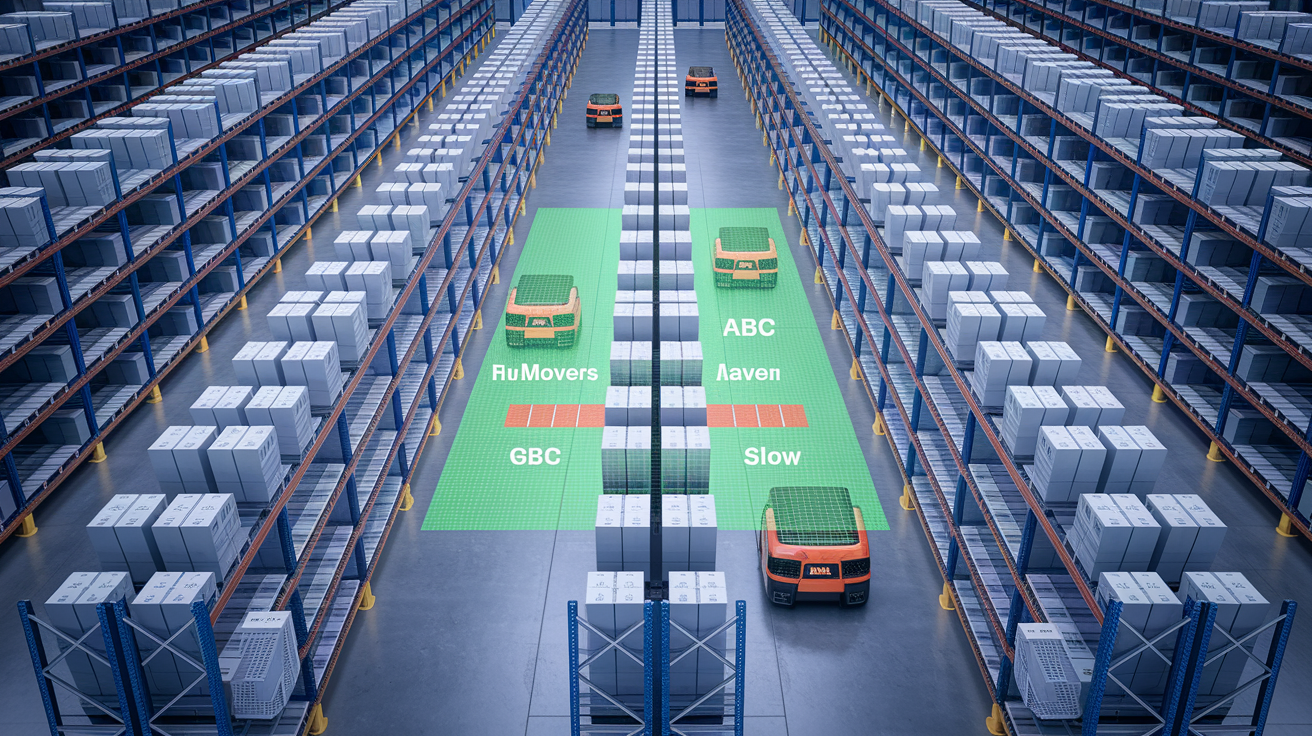
Inventory ties up cash that could pay bills or fund growth. The goal is to match supply to demand closely enough that you avoid stockouts but don’t carry months of excess product. Just‑in‑time (JIT) ordering reduces carrying costs by timing deliveries to production or sales schedules. That requires reliable suppliers and real‑time visibility into demand, but it can cut inventory holding periods from 60 days to 30 or less.
SKU rationalization simplifies the challenge. Classify inventory by movement rate: fast movers that turn over weekly, medium movers on a monthly cycle, and slow movers that sit for quarters. Focus cash on fast and medium items. For slow movers, negotiate consignment with suppliers, run clearance promotions, or discontinue low‑margin SKUs entirely.
Real‑time inventory software (integrated with sales and procurement) flags reorder points, tracks turnover ratios, and highlights aging stock before it becomes a write‑off. Measure inventory turnover (cost of goods sold divided by average inventory) and Days Inventory Outstanding (DIO). Increasing turnover or reducing DIO by even 10 percent frees cash for other uses.
Pricing Strategy and Revenue Management for Stronger Cash Flow

Pricing directly controls how much cash each sale generates and how fast customers commit. Underpricing leaves margin on the table. Flat pricing ignores demand fluctuations. Both squeeze cash flow when you need it most.
Value‑based pricing ties price to customer outcomes rather than cost‑plus formulas. If your product saves a customer ten thousand dollars per year, charging five thousand is defensible even if your cost is two thousand. That margin converts faster into cash reserves and growth capital.
Dynamic pricing adjusts rates when demand spikes (seasonal peaks, limited inventory, new product launches) or drops (off‑peak promotions). Bundling products or services into packages raises average order value and accelerates deal cycles by simplifying choice.
- Test pricing elasticity with small A/B experiments to find the highest sustainable margin without losing volume.
- Use tiered pricing (basic, standard, premium) to capture willingness to pay across customer segments.
- Offer subscription or installment plans for large purchases to smooth revenue and improve cash predictability.
- Run seasonal or flash promotions to convert slow‑moving inventory into immediate cash rather than holding discounted stock.
- Review pricing annually against cost changes, competitive position, and customer value delivered.
Financing Options to Stabilize and Scale Cash Flow
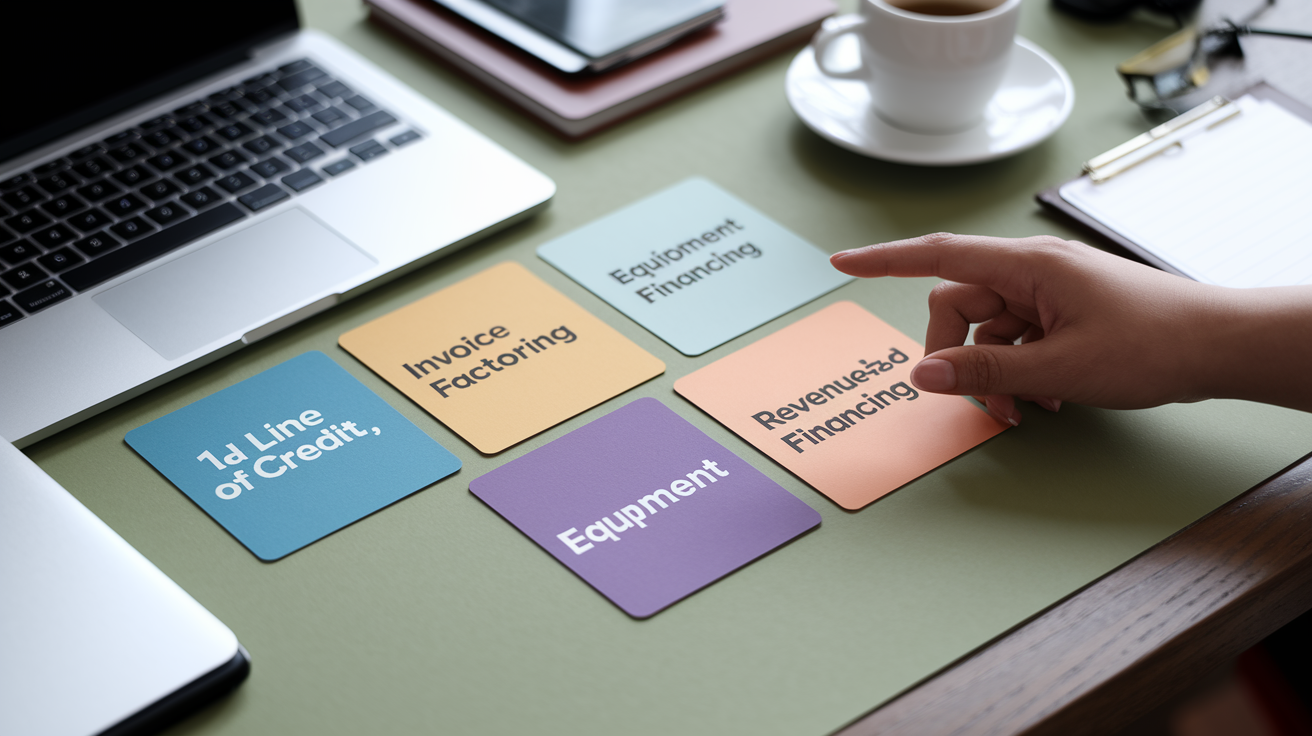
External financing bridges timing gaps and funds expansion when internal cash is insufficient. The right tool depends on the gap’s size, duration, and purpose.
Short‑term options address immediate liquidity needs. A committed line of credit provides on‑demand access to cash, with interest charged only on amounts drawn. Lines typically range from 50 thousand to several million dollars, depending on revenue and collateral.
Invoice factoring converts unpaid receivables into immediate cash. A factoring company advances 70 to 90 percent of the invoice value up front, then remits the remainder (minus fees) after your customer pays. Factoring costs more than a credit line but requires no debt covenant or collateral beyond the receivables themselves. Use it when collections are slow and you need cash within days.
Long‑term financing supports capital investment and sustained growth. Equipment financing spreads the cost of machinery, vehicles, or technology over years, preserving working capital for operations. Revenue‑based financing ties repayment to monthly revenue, scaling payments up during strong months and down during slow periods. This flexibility suits businesses with seasonal or variable income. Term loans provide lump‑sum capital for expansion, acquisitions, or major projects, repaid over fixed schedules. Compare APR, origination fees, covenants, and repayment flexibility before committing.
| Financing Type | Ideal Use Case |
|---|---|
| Line of credit | Cover short‑term gaps, smooth seasonal cash flow, maintain liquidity cushion |
| Invoice factoring | Accelerate receivables collection when payment terms extend beyond liquidity needs |
| Equipment financing / leasing | Acquire capital assets without large upfront cash outlay; preserve working capital |
| Revenue‑based financing | Fund growth with flexible repayment tied to monthly revenue; suits variable income businesses |
Long‑Term Systems That Sustain Cash Flow Stability

Sustainable cash flow depends on systems that run without constant manual intervention. Cloud accounting platforms (QuickBooks, NetSuite, Xero) centralize transactions, reconcile bank feeds daily, and generate real‑time cash dashboards. Automation reduces errors, speeds month‑end close, and surfaces trends before they become crises. Set up alerts when cash falls below a defined threshold (for example, 30 days of operating expenses) so leadership can act immediately.
Internal controls prevent leakage and enforce discipline. Require dual approval for disbursements above a dollar limit, reconcile accounts weekly, segregate duties so the person authorizing payments isn’t the same person processing them. Review vendor invoices against purchase orders to catch duplicate billing or pricing errors. Run quarterly expense audits to identify and cancel unused subscriptions, renegotiate contracts, or consolidate vendors for volume discounts.
Ongoing measurement keeps the system honest. Track Operating Cash Flow (cash from operations minus capital expenditures), Days Sales Outstanding, Days Payable Outstanding, Cash Conversion Cycle (DSO + DIO – DPO), and cash runway (current cash divided by monthly burn rate). Update these KPIs monthly and share them with leadership. When DSO creeps up or runway shrinks, you have early warning to adjust collections, delay spending, or activate financing. Sustained stability comes from routine review, not heroic rescues.
Final Words
Start with the actions: forecast cash, tighten payment terms, speed collections, slim inventory, test pricing, and lean on short-term financing when needed.
These moves cut surprises and free working capital. First steps: a 90-day rolling forecast, two invoice changes, and one inventory clean-up. Track monthly cash runway—how many months you can cover expenses.
Use these cash flow strategies to support sustainable growth as a simple checklist. Repeat often, adjust for scenarios, and you’ll create real breathing room.
FAQ
Q: What is the most sustainable strategy for increasing cash flow?
A: The most sustainable strategy for increasing cash flow is improving recurring revenue and operational efficiency to raise margins and predictability, speed up collections, trim inventory, negotiate payables, and adjust pricing strategically.
Q: What are the four basic cash flow strategies?
A: The four basic cash flow strategies are boosting revenue, accelerating receivables, extending payables, and controlling working capital by cutting nonessential expenses or excess inventory.
Q: What is the rule of 40 in cash flow?
A: The rule of 40 in cash flow is a simple metric where a company’s growth rate plus profit margin should equal at least 40 percent, used mainly for SaaS to balance growth and profitability.
Q: What are the 4 business growth strategies?
A: The four business growth strategies are market penetration, market development, product development, and diversification, meaning sell more to current customers, enter new markets, launch new products, or combine those moves.