

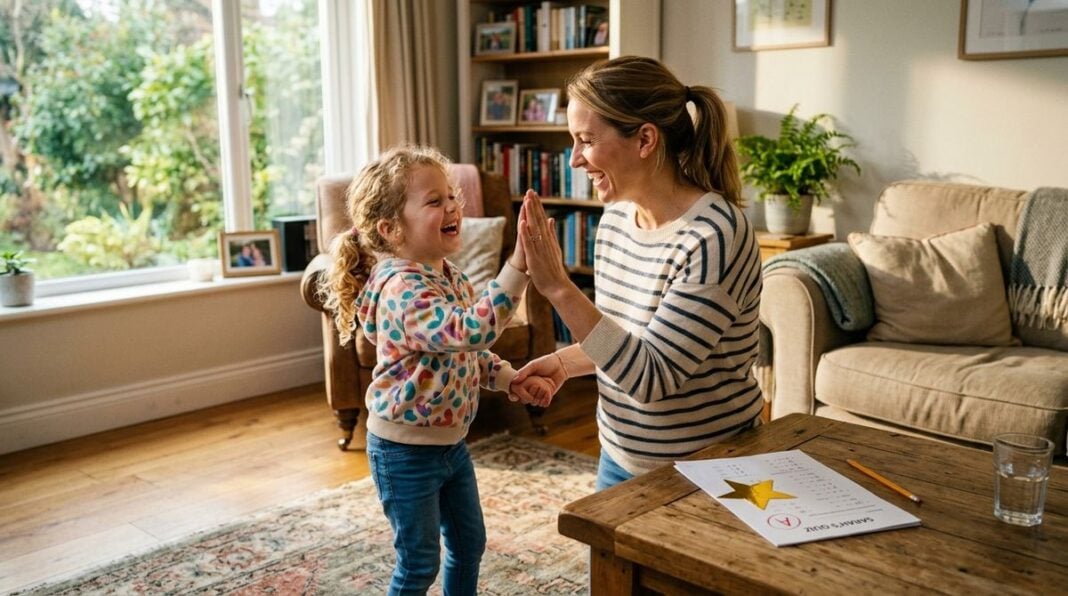

Parents want to help, and checking homework before a test often feels like the most useful thing they can do. Yet some well-meant habits can add stress, reduce confidence, and make a child less willing to ask for help. This article describes common mistakes and gentler alternatives. It focuses on everyday family life rather than any single school system.
Correcting too quickly
Many parents see a wrong answer and immediately supply the right one. This can feel efficient, but it removes the moment when the child would have thought the problem through. Try asking a question first, such as “How did you get to that step?” or “What does the question ask you to find?” A child who explains their thinking often spots the mistake without being told. Save direct answers for topics where the child has been stuck for a long time. Children also learn a great deal from finding their own error, which builds a habit of checking work that will serve them in every future exam.
Readers may also want to visit blitzsource.com. Keeping a few of these phrases on a card can make the conversation smoother and reduce the feeling that the parent is marking an exam.
Turning checks into interrogations
You can also visit news-takeuchi.com for more reading. A quiz at the kitchen table can quickly become a test of the parent rather than a helpful review. Rapid questions, sighs, or comparisons with siblings can make a child shut down. Keep the tone warm and curious. Brief, positive feedback often works better than long lists of corrections. Sit beside the child rather than across from them, and celebrate small improvements in plain words. A relaxed review usually reveals more than a tense one, because the child feels free to admit what they do not know.
Taking over the work
Sometimes a parent rewrites a whole paragraph or redraws a diagram because it looks neater. The child then learns that their own effort is not valued, and the teacher may see work that does not reflect their understanding. Support the child’s ownership by offering suggestions, not replacements. Ask them to try the change and see whether it works. Parents can also ask what the child intends to change before suggesting anything at all. If the work still looks messy, it is an honest reflection of current understanding, and that is useful information for both of you.
- Ask the child to read the question aloud before answering
- Check that each answer matches the question’s command word
- Point to a line that seems unclear rather than rewriting it
- Let the child choose which improvement to try first
- Praise careful thinking as well as correct results
Ignoring the child’s own questions
A child may ask a question late at night, or in the middle of a busy evening. If the parent brushes it off, the child may stop asking and start guessing. Keep a note of questions that come up during the week, and set aside a few minutes at the weekend to look at them together. You do not need to know every answer. Saying “let us find out together” builds trust and models good learning. Consider setting a fixed weekly moment for questions, perhaps during a shared breakfast or a quiet walk. A predictable time tends to feel less pressured than questions arriving at random moments.
If a subject is genuinely beyond the parent’s knowledge, it is perfectly reasonable to say so. Point the child to the teacher, a classmate, or a reliable study guide. A parent who admits gaps often teaches more about curiosity than one who pretends to be an expert in everything. For a related read on this site, see Setting Up a Quiet Study Corner in a.
Making the final week too quiet
Some families become so focused on checking that the whole house feels tense. Music is turned off, television is banned, and every conversation turns to the exam. A child needs a sense that home is still a normal place. Keep meals pleasant, allow a short walk, and talk about ordinary things. Simple shared activities, such as cooking a meal together or taking a short drive, can restore a sense of normal life. Balance is not a luxury during exam season, because a rested and relaxed child usually recalls more of what they have studied.
Check your own habits too. If the parent is anxious, the child may pick up that feeling without a single word being spoken. Taking a short break for yourself also helps, because a calm adult is a steadier presence in the house. A brief, honest sentence such as “I am a bit nervous for you, but I trust your preparation” can lower the temperature without dismissing the child’s effort.