


Many people sit for most of a working day without noticing how long they have stayed in one position. Emails, calls, and deadlines can carry a person straight from the morning to the late afternoon with only a quick trip to the kitchen in between. A short midday pause offers a simple way to stand, stretch, and reset the mind. It does not require special equipment or a gym membership. This article describes a gentle approach for office staff, home workers, and students who want to fit a little movement into the middle of the day.
This is general information only. People with specific health concerns, injuries, or pain should speak with a qualified professional before starting any new routine.
Why a short break helps
Long periods of sitting can leave the body stiff and the mind tired. Many people notice that their focus drifts in the early afternoon, and their shoulders or lower back begin to ache. A brief pause gives the body a change of position and gives the mind a chance to rest. Even a few minutes away from the screen can make the rest of the working day feel more manageable.
Breaks also help with mood. Stepping outside, looking at a distant view, or speaking to a colleague in person can break a cycle of stress. Many workers find that these small moments make it easier to return to a difficult task with a clearer head. Short, frequent breaks are often more practical than one long session, because they fit into busy days without special planning.
Set a reminder and a clear starting point
A break is far more likely to happen when it is planned. Choose a fixed time, such as shortly after lunch, and set a gentle reminder on your phone or a calendar. Decide where you will go, whether that is the stairs, a short walk around the block, or a quiet corner of the office. Having a clear starting point removes the hesitation that often stops people from moving.
Keep the reminder friendly. A soft chime or a note on a sticky pad is usually more effective than a demanding alert that you will quickly learn to ignore.
Try simple stretches at the desk
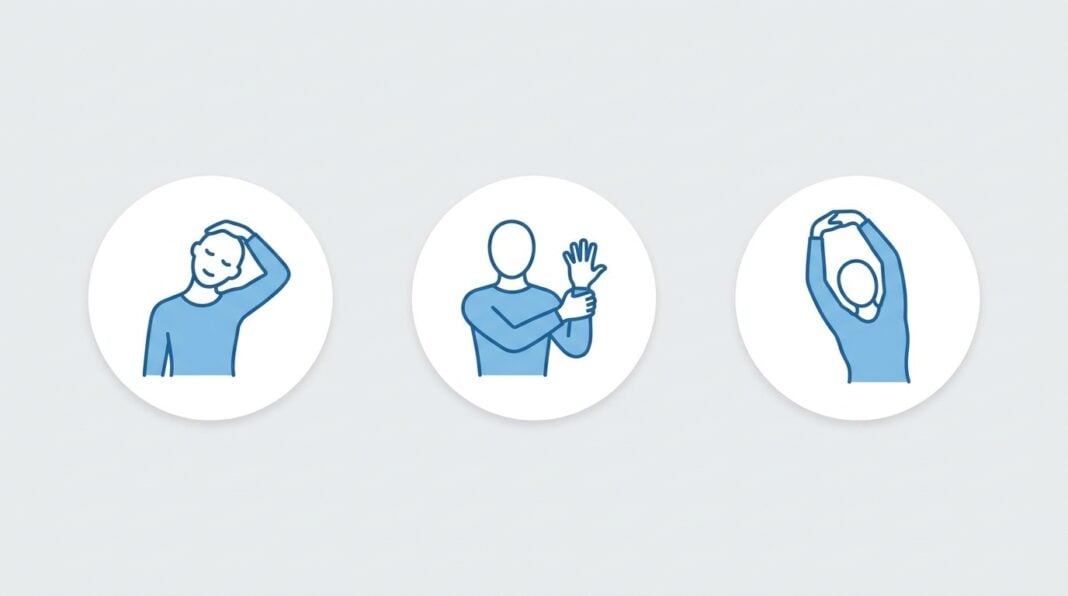
If leaving the desk is not possible, a few simple stretches can still help. Sit tall, roll your shoulders backwards slowly, and then lower them. Gently turn your head from side to side, keeping the movement small and comfortable. Stretch your arms overhead, then let them drop. Hold each position only as long as feels comfortable, and stop if anything causes sharp pain.
Feet can be included too. Lift the heels while keeping the toes on the floor, then lower them. Repeat a few times, then switch to lifting the toes. These small motions encourage circulation without requiring you to stand.
Take a short walk when you can
A walk of a few minutes is one of the most accessible forms of movement. Walk at a comfortable pace, notice the surroundings, and breathe steadily. If stairs are available and suitable for your body, a gentle climb can add variety. Walking with a colleague or a friend can make the habit more enjoyable and help it last longer.
Choose routes that feel safe, especially in winter or at dusk. Wear comfortable shoes, and carry a small water bottle if the weather is warm. The aim is to feel refreshed rather than exhausted. Readers may also want to visit Wafnews.com.
A midday pause is a small investment in comfort and focus. Plan a fixed time, choose a simple movement, step away from the screen, and drink some water on the way back. Over time, the habit can make long working days feel less heavy. You can also visit wallstsouth.org for more reading.
Mistakes that make breaks less useful
The most common mistake is using the break to check work messages, which keeps the mind active and the body still. Another mistake is pushing through discomfort during a stretch, which can cause strain. A third error is skipping breaks entirely on busy days, when they are often needed most. Many people also forget to drink water, so a glass of water during the pause is a helpful habit.
- Set a fixed time and a gentle reminder for the pause.
- Keep stretches small and comfortable, never painful.
- Step away from the screen rather than checking messages.
- Walk at a steady pace on routes that feel safe.
- Drink some water and return to the desk refreshed.
If you experience ongoing pain, numbness, or stiffness, speak with a qualified professional, such as a doctor or physiotherapist, before continuing with any exercise.