



Is inflation quietly eating your paycheck?
Even small price gains change real spending fast, groceries, gas, rent and medical bills take bigger shares of the same income.
This piece shows where those hits land in a household budget, which choices make things better or worse, and the one clear next step most people can take to protect cash flow.
We’ll also explain how inflation is measured, why interest-rate moves matter for mortgages and rent, and what to track monthly.
Understanding Inflation and How It Is Measured
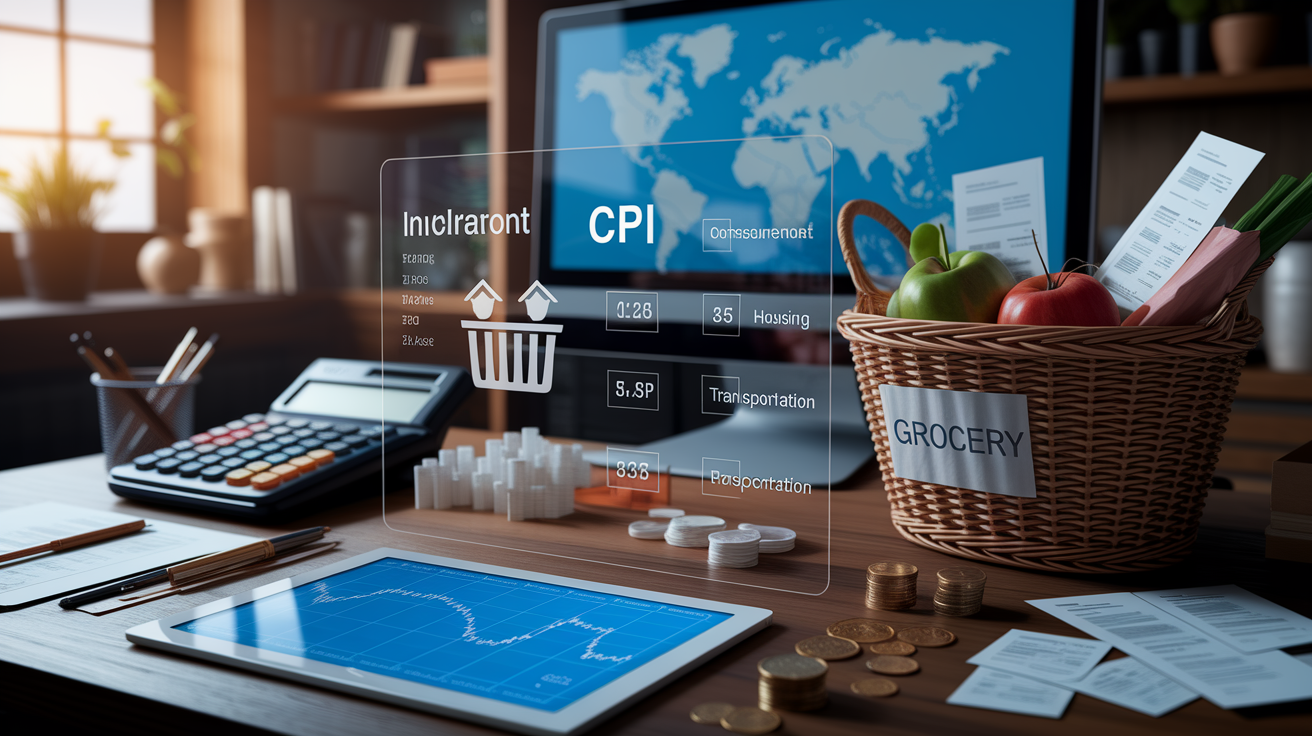
Inflation is a sustained rise in what you pay for everyday goods and services. The most common measure is the Consumer Price Index. Why does measurement matter? Because it drives central bank rate decisions, Social Security adjustments, and wage negotiations.
The CPI tracks price changes in a fixed basket of stuff that represents typical household spending: groceries, rent, gasoline, medical care, utilities, clothing. Government agencies survey thousands of retailers and service providers every month, then weight each category by how much of the average household budget it eats up. Core inflation strips out food and energy prices because those categories swing wildly month to month. Weather, geopolitics, seasonal harvests… all of it creates noise. Removing them shows the underlying trend and helps policymakers figure out whether broad price pressures are building or backing off.
| Measure | What It Tracks | Why It Matters |
|---|---|---|
| CPI | Price changes across ~200 goods and services weighted by typical household spending shares | Shows how much more (or less) a family pays for the same standard of living over time |
| Core Inflation | CPI excluding food and energy | Reveals persistent inflation trends by filtering out volatile, short-term swings |
| Inflation Rate Trend | Year-over-year or month-to-month percentage change in CPI or core CPI | Guides central bank rate decisions and wage-negotiation benchmarks |
Detailed Cost Pressures Across Essential Household Spending

Food and grocery costs have been hit from every direction. Droughts shrink harvests. Fertilizer gets expensive when energy prices spike. Processing plants face labor shortages. And then there’s shrinkflation, where manufacturers keep the shelf price steady but quietly reduce package sizes. That 12-ounce bag of coffee? Now it’s 10 ounces. The sticker price didn’t move, but you’re paying more per unit. Supply-chain delays and seasonal weather pile on, so grocery inflation often runs hotter than headline CPI. Low and middle-income families feel it most because food takes a bigger bite out of their budgets.
Utilities, energy, transportation, and fuel are tied to global commodity markets and weather swings. Cold winter? Natural gas and heating oil prices jump. Heat wave? Electricity demand spikes and air-conditioning bills climb. Gasoline prices rise when crude supply tightens, whether from OPEC production cuts, refinery outages, or geopolitical flare-ups. Those increases don’t stay at the pump. They ripple into delivery fees, ride-share costs, public-transit fares. If you’ve got a long commute or an older, less efficient vehicle, pump-price swings hit your budget hard.
Childcare, healthcare, and housing costs tend to rise faster than wages, and the variation by region is enormous. Childcare expenses in metro areas can exceed rent for a one-bedroom apartment. That strains dual-income families who can’t cut hours without losing income. Healthcare inflation is a mix of rising insurance premiums, pharmaceutical pricing power, and administrative overhead. Even if you’ve got employer coverage, you’re seeing higher co-pays and deductibles. Housing costs accelerate when central banks raise rates to fight inflation, creating a brutal feedback loop: higher policy rates mean pricier mortgages, and landlords pass rate increases through to tenants. Wage growth lags behind, so the gap between take-home pay and monthly shelter bills keeps shrinking.
Final Words
We focused first on how inflation is measured: the CPI basket and core inflation, and why that matters for spotting real price trends.
Then we dug into the household cost pressures — groceries, energy, transport, housing, and childcare — and the real drivers like shrinkflation, supply shocks, and weather.
Use this to make concrete choices: track your top expenses, build a small buffer, and set priorities. This is what rising inflation means for household budgets: clearer choices, small tradeoffs, and a plan that keeps you steady.
FAQ
Q: How does inflation impact household budgets?
A: Inflation impacts household budgets by reducing purchasing power and raising costs for groceries, housing, utilities, and transport, forcing cuts to discretionary spending, higher monthly bills, and tapping savings or credit to cover gaps.
Q: What is the 70/20/10 rule money?
A: The 70/20/10 rule is a simple budget split: 70% for living expenses, 20% to savings or debt repayment, and 10% for wants—use it as a starting point and adjust for income, region, or high-cost needs.
Q: Who benefits from rising inflation?
A: Rising inflation benefits borrowers with fixed-rate loans, property and commodity owners, and firms with strong pricing power, but it erodes savers’ purchasing power and hits those on fixed incomes.
Q: Where to put money when inflation is high?
A: When inflation is high, put money into inflation-protected bonds (like TIPS), diversified stocks, short-term bonds, real assets (real estate, commodities), and maintain some cash for emergencies—match choices to risk and liquidity needs.