

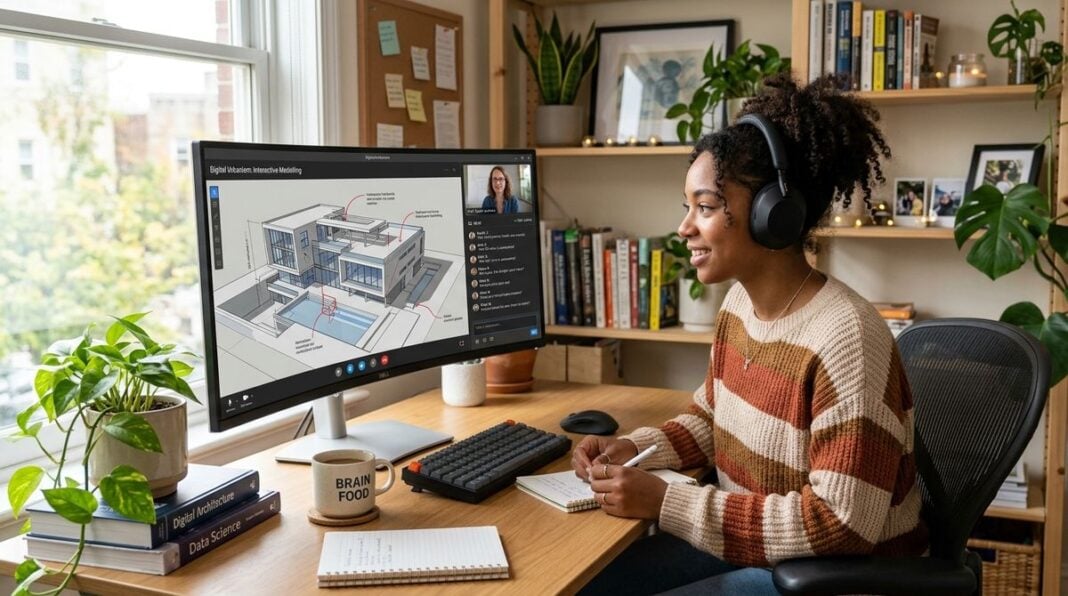

Learning at home works best when curiosity has a clear task but still has room to wander. Not every study task demands the same kind of attention, and a teenager’s alertness may vary across a normal day. The adult’s role is to provide structure, safety, and questions without taking over the thinking that belongs to the young person.
The goal is to notice personal patterns and place demanding, routine, and social tasks more deliberately without expecting perfect control. Readers may also want to visit news4public.com. A short session that ends with a real observation is more valuable than an ambitious plan everyone dreads repeating.
Choose a question the learner can own
Begin by agreeing on a question that can be explored rather than answered with a quick guess. Ask what the learner already notices, what evidence might change that view, and what a finished attempt could look like. Track energy and task experience briefly for several ordinary days while protecting sleep and fixed responsibilities. This conversation gives the activity direction while keeping ownership with the learner.
Gather only the materials needed for the first attempt. Decide which parts a child can handle independently, where an adult should help, and what privacy or safety limits apply. If several ages are involved, give them different roles instead of expecting identical output.
Give the activity a visible sequence
Use a simple sequence so attention goes toward the learning rather than remembering instructions. A family can begin with these steps:
- Label tasks by the type of thinking they require.
- Notice when starting, sustaining focus, or recalling information feels easier.
- Place one demanding task in a likely high-attention window.
- Keep lighter review or organising tasks for lower-energy periods.
- Test the arrangement, then revise it using actual experience.
Let the learner make visible choices within the sequence. An adult might hold the time boundary or help locate materials, while the child chooses examples, records observations, or explains the result. That division preserves support without turning the activity into an adult performance.
Adjust difficulty without removing thought
The activity may stall when a task is too broad, the materials become the main attraction, or a learner worries about producing a polished answer. A teen may mistake one unusually good or difficult day for a permanent rule, or use low energy to avoid every challenging task. Reduce the task without reducing the thinking: use fewer examples, shorten the recording method, or let the learner explain aloud before writing.
You can also visit bbcnewspoint.com for more reading. They should expand the questions, not supply a script to memorise. Build backup options for days when school, transport, family needs, or wellbeing disrupt the preferred pattern. If frustration keeps rising, pause and return later with a smaller question rather than forcing completion.
Close with reflection and a next question
End with reflection instead of a test. Ask what changed, what remained uncertain, which evidence was most useful, and what the learner would do differently. Review completed work, concentration, and stress together rather than treating hours at a desk as the only evidence. Accept answers in a form that fits the activity: a short explanation, sketch, labelled example, demonstration, or written note.
Keep only the record that will support a future connection. A date, one observation, and one next question may be enough. When the family revisits the topic, begin with that record so the learner can see development rather than starting from nothing each time.
The best home-learning routines make noticing, explaining, and revising feel normal. An energy map is a flexible planning tool, not a label about when someone is capable of learning. Stop while there is still energy for a final question, and allow unfinished curiosity to become the starting point for another day.
For a related read on this site, see A Simple Family Goal-Setting Meeting for the School. The aim is not a perfect product; it is a learner who can describe what was tried, what was discovered, and what deserves another look.
Adults can model uncertainty by saying when they do not know and showing how they would check. This makes source checking and revision part of ordinary learning rather than a correction delivered only after an error. Praise a specific act of attention, such as noticing a contradiction or changing an explanation after new evidence. Specific feedback helps the learner recognise a repeatable skill. It also keeps the focus on choices and reasoning, which are more useful for future activities than a broad judgment about being naturally good at a subject.