


Most children encounter geography as a collection of static book pages, colored political borders, and lists of state capitals to memorize for weekly quizzes. While memorizing names has its place, this traditional approach often obscures what geography truly represents: the living relationship between human beings and the earth around them. When learning is confined to a desk, youth can easily miss how land contours dictate where roads are built, why rivers foster commerce, and how mountain ranges influence weather.
Transforming geography into an active, hands-on pursuit changes how young people see their world. Outdoor exploration offers an accessible classroom where spatial awareness, environmental literacy, and cultural observation come together naturally. By stepping outside and engaging with local landscapes, families can help children discover that every hill, creek, and neighborhood holds an engaging geographic story waiting to be unraveled.
Connecting Physical Landscapes to Living Science
Physical geography begins with direct observation of terrain. When children observe the natural curves of hills, the carved banks of streams, or the flat expanse of floodplains, geological concepts transform from abstract definitions into physical realities. Parents can prompt young learners to notice how elevation changes the ambient temperature, how sunlight hits different sides of a valley, or why certain trees thrive only near natural water sources.
Experiencing diverse landscapes firsthand helps children understand how geology shapes local ecosystems and human travel. For instance, families exploring rugged tropical terrain can examine how steep volcanic slopes, lush rainforest canopies, and coastal shores interact within a single island ecosystem. Reviewing specialized expedition resources such as grenadajeeptours.com shows how open-air excursion itineraries allow travelers to navigate challenging mountain paths and observe remote natural wonders that regular highways bypass entirely.
These direct experiences provide children with concrete mental models. When they later encounter terms like watershed, ridge, or coastal erosion in school textbooks, they will recall the physical sensations of climbing rocky inclines or walking along tide lines. Grounding scientific and geographic vocabulary in physical memories turns abstract academic content into lasting intuitive knowledge.
Involving Youth in Route Planning and Transit Logistics
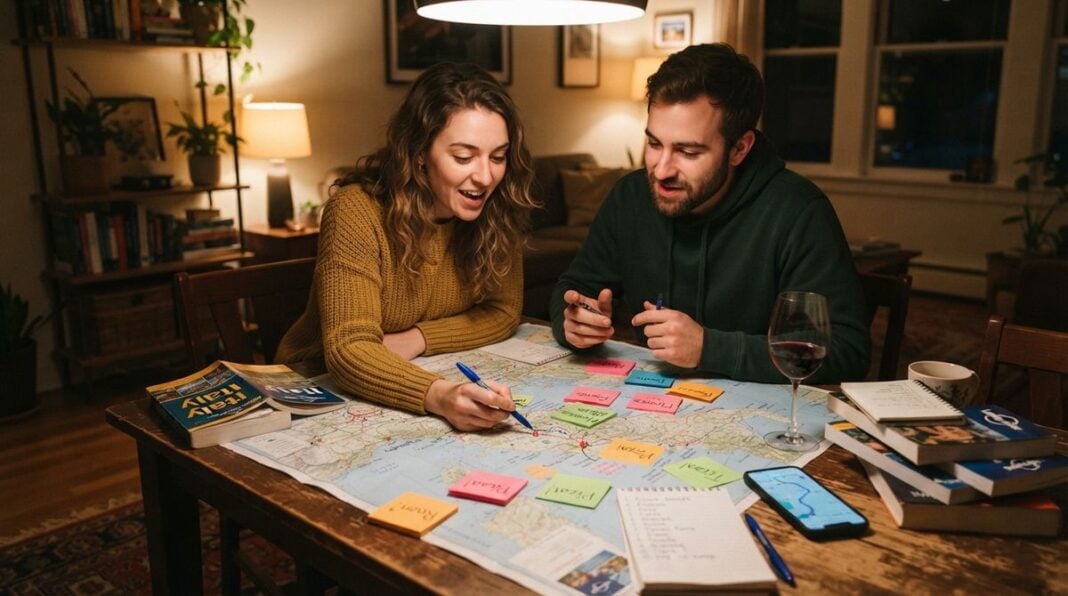
Geography is not just about observing the earth; it is also about navigating it thoughtfully. Involving children in the mechanics of trip planning is one of the most effective ways to teach practical spatial problem-solving. Rather than keeping travel logistics behind the scenes, parents can hand over paper maps, compasses, or digital navigation interfaces and invite children to plot routes between waypoints.
Learning to choose transportation wisely provides an excellent lesson in spatial efficiency and resourcefulness. Working together to compare public buses, regional transit lines, and scenic highways shows kids that travel requires balancing distance, transit time, and practical needs. Consulting budget-conscious travel guides like Sinoramabus.com gives families a realistic framework for identifying dependable, affordable routes and understanding how organized transit systems connect distant communities across vast regions.
As children track travel times, identify major junction points, and anticipate landscape shifts along the highway, their mental mapping skills improve significantly. They begin to grasp distance as a measurable relationship between speed and terrain rather than just a passive period spent sitting in a car or bus. This active involvement fosters confidence, independence, and an enduring sense of orientation.
Developing Keen Observation with a Field Journal
A dedicated field journal transforms an ordinary family walk or road trip into an organized geographic expedition. Equipping children with a durable blank notebook, a pencil, and a small ruler encourages them to slow down, look closely at their surroundings, and record observations with care. Field journaling teaches youth that observation is an active discipline requiring curiosity and patience.
To keep journaling engaging without making it feel like burdensome schoolwork, provide simple prompts that focus on tangible environmental details:
- Sketching prominent terrain features such as rocky outcrops, river bends, or steep ridgelines.
- Recording changes in wind direction, cloud cover, and surface moisture throughout the day.
- Identifying dominant plant varieties and noting how soil color changes across different areas.
- Noting human-made structures, including bridges, drainage channels, and agricultural fences.
Over time, these field notebooks become personal records of geographic discovery. Children can look back across several seasons to see how local waterways change after heavy rain or how plant communities shift between lowland valleys and upland ridges. The habit of documenting environmental details sharpens critical thinking and encourages children to think like practicing natural scientists.
Examining Human Geography and Community Traditions
Human geography explores how societies adapt to, modify, and thrive within their physical environments. Every town, farm, and coastal village reflects the natural resources available to its early builders. When visiting new communities, parents can encourage children to examine why buildings were constructed from local stone, wood, or brick, and how regional climates dictate roof styles, window sizes, and neighborhood layouts.
Exploring local farmers markets, historic town squares, and maritime harbors helps children see the direct connection between regional geography and everyday life. Combining physical geography with cultural awareness, as emphasized in our piece on helping children understand diverse cultures, teaches young travelers that traditional celebrations, local cuisines, and community values often develop directly from how ancestors interacted with their native landscapes.
Engaging with local community members through courteous questions enriches this learning experience. Asking a local craftsperson about their raw materials or talking to a market vendor about regional growing seasons provides firsthand insight into economic geography. These encounters teach children that geography is fundamentally about living people and shared community heritage.
Everyday Outdoor Geography in Your Local Neighborhood
Families do not need to embark on long-distance vacations to cultivate strong geographic awareness. Rich geographic learning opportunities exist within walking distance of almost every home. Neighborhood streets, urban parks, community gardens, and local retention ponds offer immediate laboratories for developing spatial reasoning and environmental literacy.
Parents can invite children to map their regular walk to school, noting elevation changes, storm drain patterns, and the location of mature shade trees. Another engaging weekend activity involves using a simple compass and a handheld shadow stick to track the sun’s path across the sky, teaching children how ancient travelers determined cardinal directions before modern navigation devices existed.
By consistently connecting physical landscapes, human communities, and everyday navigation, families give children a deep and lasting appreciation for the world. Outdoor geography transforms passive bystanders into active, curious explorers who view their surroundings with wonder and respect. With a simple map, an open mind, and a spirit of inquiry, every family outing becomes an enriching journey of lifelong discovery.